
By Ramesh Kumar, MD Board-Certified Radiation Oncologist | Harvard-Certified in Medical Acupuncture | Founder, LifeWell MD | Member, International Society for Sexual Medicine | 40 Years in Oncology | Founder of Four Cancer Centers
The Question That Haunts Men at 3 A.M.
You’re standing in the bathroom—again—for the third time tonight. The stream takes forever to start, then dribbles out like water from a kinked hose. You stare at the wall and think: Is this cancer?
I’ve heard this fear whispered in my exam room thousands of times over four decades. Men sit down, avoid eye contact, and finally ask the question they’ve been Googling at midnight: “Doc, I’m getting up three times a night. Is this it?”
Here’s what I tell them: Probably not. But ignoring it could kill you anyway.
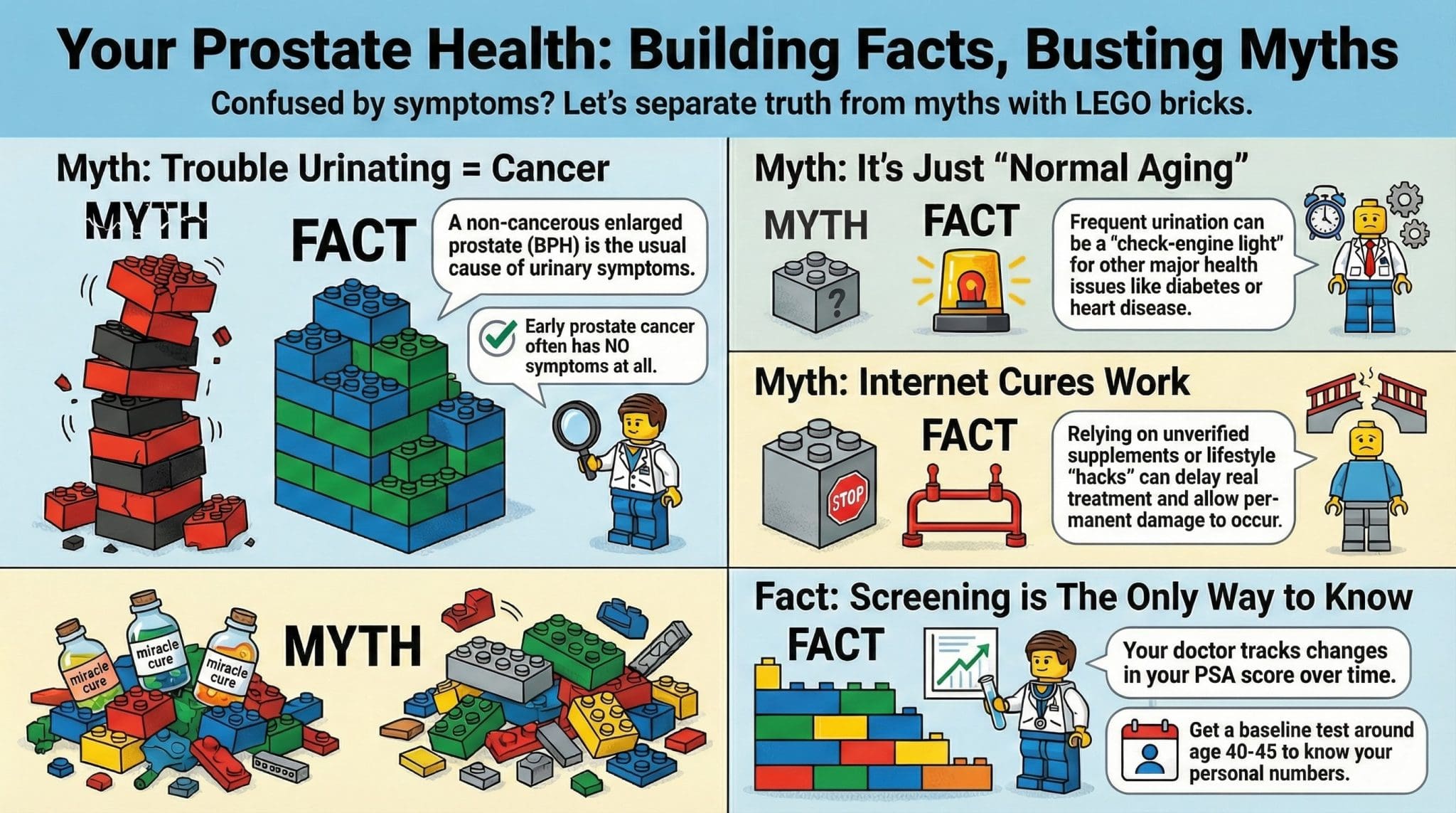
That answer surprises them. Because the real danger isn’t just cancer—it’s the assumption that difficulty urinating is “just aging.” That myth has filled more oncology wards than genetics ever has.
“Frequent urination is a check-engine light, not a rite of passage.”
The Truth About Your Prostate: Two Problems, One Gland
Your prostate is a walnut-sized gland wrapped around your urethra like a donut. When it changes—and it will—you feel it every time you unzip your pants.
But here’s where most men get confused: the symptoms of a benign problem and a deadly one can look completely different—or terrifyingly similar.
BPH vs. Prostate Cancer: Side-by-Side Comparison
| Factor | BPH (Benign) | Prostate Cancer |
|---|---|---|
| What It Is | Non-cancerous enlargement that squeezes the urethra | Malignant cells growing out of control in prostate tissue |
| Early Symptoms | Weak stream, hesitancy, frequent urination, nocturia | Usually NONE—often silent until advanced |
| How Common | 50% of men age 51-60; 90% by age 80 | 1 in 8 men will be diagnosed in their lifetime |
| Location in Prostate | Transition zone (around urethra) | Peripheral zone (outer edge)—away from urethra |
| The Danger | Bladder damage, kidney failure, infections if untreated | Metastasis to bones, lymph nodes; can be fatal |
The critical insight: BPH causes symptoms. Early prostate cancer usually doesn’t. You cannot use your urinary stream as a cancer test. This is why screening matters—and why “feeling fine” means nothing.
Why “It’s Just Aging” Is the Most Dangerous Myth in Men’s Health
In my 40 years treating cancer, I’ve watched too many men dismiss symptoms that were screaming for attention. “My father had prostate problems,” they say. “I’m 55—I’m supposed to pee all night.”
No. You’re not.
While the prostate naturally grows with age, severe urinary symptoms are often warning flares from a body under metabolic siege. The medical literature is clear: BPH and lower urinary tract symptoms (LUTS) are strongly linked to:
- Insulin resistance and diabetes: High insulin is a growth hormone—it tells tissues to proliferate, including prostate tissue.
- Cardiovascular disease: The arteries feeding your prostate and penis are tiny. If you have erectile dysfunction, it’s often the “canary in the coal mine” for heart disease.
- Chronic inflammation: Systemic inflammation accelerates both BPH progression and cancer risk.
When you ignore urinary symptoms because you think they’re “normal,” you may be missing the early warning signs of metabolic syndrome, pre-diabetes, or cardiovascular disease. Your prostate is telling you something about your entire body.
The Internet Myths That Could Cost You Your Life
Social media is flooded with non-medical influencers selling simple fixes for complex physiology. As both a radiation oncologist and a functional medicine physician, I’ve seen patients delay critical treatment because a biohacker on TikTok told them to drink herbal tea. Let me set the record straight:
Myth #1: “Frequent Ejaculation Prevents Cancer”
The claim: Biohackers cite studies suggesting 21 ejaculations monthly “drastically reduces” risk.
The science: There is epidemiological data showing correlation—possibly from “flushing” carcinogens or reducing ductal stasis. But as a member of the International Society for Sexual Medicine, I can tell you: correlation is not causation. Men healthy enough for frequent sexual activity typically have better cardiovascular health, lower obesity rates, and better diets—all of which independently reduce cancer risk.
The verdict: Sexual health is vital for overall well-being. But sex is not a vaccine for cancer—it’s one piece of a healthy lifestyle, not a standalone cure.
Myth #2: “Herbal Teas Can Shrink Your Prostate”
The claim: Saw palmetto, stinging nettle, and “prostate-shrinking teas” can reverse BPH.
The science: Saw palmetto weakly mimics 5-alpha-reductase inhibitors like Finasteride. Some studies show mild symptom relief, but major clinical trials found it no better than placebo for actually shrinking the gland.
The verdict: Relying on unverified supplements to treat a urinary obstruction is dangerous. It can delay necessary intervention while your bladder muscle deteriorates—damage that may be permanent.
Myth #3: “Eliminate Seed Oils and You Eliminate Cancer”
The claim: Seed oils are the root cause of prostate cancer.
The science: Highly processed inflammatory diets (high in sugar and unhealthy fats) absolutely contribute to cancer progression via insulin and inflammation pathways. But blaming seed oils exclusively is reductionist nonsense.
The verdict: Cancer is multifactorial—genetics (BRCA mutations), hormonal imbalances, and environmental toxins all play major roles. An anti-inflammatory diet is crucial, but it must be paired with screening, not used as a substitute.
The PSA Test: A Radiation Oncologist’s Perspective
Many men avoid screening because they’ve heard PSA tests produce “too many false positives” or because they fear the digital rectal exam.
Let me be direct: PSA saves lives. I have treated advanced prostate cancer. I have sat with men and their families after a diagnosis that came too late. The tragedy is almost always the same: “I felt fine. I didn’t see the point of testing.”
Yes, BPH, infection, and even cycling can temporarily elevate PSA. That’s why we don’t look at a single number—we track your PSA velocity. If your PSA jumps from 1.0 to 3.0 in a year, that’s a red flag even if 3.0 is technically “normal.”
Modern Prostate Screening: Beyond the Basics
| Screening Tool | What It Tells Us |
|---|---|
| Baseline PSA (age 40-45) | Establishes your personal reference point for tracking changes over time |
| PSA Velocity | Rate of change matters more than absolute number—rapid rise demands investigation |
| Free PSA % | Helps distinguish BPH (higher free %) from cancer (lower free %) |
| 4Kscore / PHI | Advanced blood tests that calculate probability of aggressive cancer |
| MRI-Guided Biopsy | Precision targeting—distinguishes aggressive “tigers” from indolent “pussycats” |
The LifeWell MD Approach: Where Oncology Meets Functional Medicine
After treating over 10,000 cancer patients and founding four cancer centers, I transitioned to integrative medicine because I saw what conventional medicine was missing: prevention and root-cause optimization.
At LifeWell MD, we don’t wait for disease to announce itself. We combine the diagnostic precision of oncology with the proactive wisdom of functional medicine:
Metabolic Optimization
Since insulin acts as a growth factor, stabilizing your blood sugar is prostate protection. We use intermittent fasting protocols, low-glycemic nutrition, and targeted weight management. We also address gut health—systemic inflammation often starts in the microbiome.
Evidence-Based Nutrient Therapy
Lycopene (from cooked tomatoes) has robust data supporting prostate health. Zinc is critical—your prostate accumulates more zinc than any other organ. We also use targeted peptide therapy to modulate inflammation and support cellular repair.
Hormonal Balance
Contrary to outdated beliefs, testosterone does not cause prostate cancer. However, low testosterone is linked to metabolic syndrome—which is a risk factor. We optimize androgen levels with precision monitoring to ensure vitality without fueling pathology.
Stress Resilience
Chronic stress elevates cortisol, which suppresses immune surveillance of cancer cells. My training with the Harvard Benson-Henry Institute in Stress Management and Resiliency Training (SMART) confirmed what ancient wisdom traditions have always known: mind-body medicine is not “fluff”—it’s physiology. Managing stress is managing your biochemistry.
Frequently Asked Questions
Can BPH turn into prostate cancer?
No. BPH is not a precursor to cancer—they develop independently in different zones of the prostate. However, you can have both conditions simultaneously, which is why proper screening is essential even if you’ve been diagnosed with BPH.
At what age should I start getting screened?
Most men should establish a baseline PSA between ages 40-45. If you are African American or have a first-degree relative with prostate cancer, begin earlier—around age 40. The baseline gives us something to compare against as you age.
Does testosterone therapy increase my cancer risk?
Current evidence does not support the old belief that testosterone causes prostate cancer. However, testosterone therapy requires proper screening and monitoring. At LifeWell MD, we evaluate your prostate health thoroughly before and during any hormone optimization protocol.
What symptoms should send me to the doctor immediately?
Blood in urine or semen, bone pain (especially in the back, hips, or pelvis), sudden inability to urinate, or unexplained weight loss warrant immediate evaluation. Don’t wait.
How accurate is the PSA test?
PSA alone isn’t a cancer test—it’s a prostate-specific test. Elevated PSA can result from BPH, infection, or recent ejaculation. That’s why modern practice uses PSA trends over time (velocity), Free PSA percentage, and advanced markers like 4Kscore to determine who actually needs further investigation.
Are there foods that protect the prostate?
Lycopene-rich foods (cooked tomatoes, watermelon, pink grapefruit), cruciferous vegetables (broccoli, cauliflower), fatty fish rich in omega-3s, and zinc-rich foods (pumpkin seeds, shellfish) all have evidence supporting prostate health. An anti-inflammatory Mediterranean-style diet is the foundation we recommend.
Take Control of Your Narrative
You don’t have to accept frequent urination, sexual dysfunction, or the fear of cancer as inevitable parts of aging. You don’t have to navigate the noise of internet misinformation alone.
Get screened. Get a baseline PSA. Look at your metabolic health. Distinguish the BPH from the cancer. And if you’re confused by the noise, find a physician who can see the whole picture.
At LifeWell MD, we combine the precision of oncology with the wisdom of functional medicine. We don’t just treat the prostate—we treat the man. Learn more about our comprehensive services designed to support every aspect of men’s health.
Ready to Take the Next Step?
If you’re over 45—or over 40 with a family history—schedule a comprehensive evaluation.
Stop Guessing. Start Living.
You don’t have to lose sleep over your prostate health.
Every night you spend worrying about your symptoms is a night you aren’t resting and recovering. You’ve read the myths, and you’ve seen the conflicting advice. Now, it’s time for clarity.
You need more than a generic 15-minute appointment. You need the precision of a Radiation Oncologist who understands the cellular risks of cancer, combined with the wisdom of a Functional Medicine Expert who knows how to restore your vitality without unnecessary drugs or surgery.
Dr. Kumar and LifewellMD are here to bridge that gap with their Stay Sharp program.
We don’t just look at your numbers; we look at you. Whether it’s advanced screening, hormonal optimization, or a personalized nutrition plan to lower inflammation, we build a roadmap that keeps you out of the operating room and back to doing what you love.
Take the first step toward longevity today.
Please check out his 120 five star reviews on Healthgrades and his 136 five star reviews at WebMD..
👉 SCHEDULE YOUR COMPREHENSIVE MEN’S HEALTH EVALUATION: (561) 210-9999
📍 Serving North Palm Beach & The Palm Beaches
Advanced Men’s Health in the Heart of Palm Beach County
Located conveniently for patients in North Palm Beach, Palm Beach Gardens, Juno Beach, and Jupiter, our LifewellMD office offers a sanctuary for men seeking proactive health solutions. We understand the active lifestyle of the Palm Beaches—whether you are looking to improve your golf game, maintain your energy for tennis, or simply enjoy your retirement without health limitations.
Don’t let BPH or fatigue keep you off the course. Dr. Kumar brings world-class oncology and functional medicine expertise right to your neighborhood, offering an alternative to the crowded waiting rooms of large hospital systems.
- Service Areas: North Palm Beach, Singer Island, Palm Beach Gardens, Jupiter, Lake Park.
- Focus: Prostate Health, Hormone Optimization, Metabolic Wellness.
📍 Serving The Treasure Coast (Port St. Lucie)
Holistic & Integrative Medicine for St. Lucie & Martin Counties
For our patients on the Treasure Coast, LifewellMD in Port St. Lucie is your hub for transformative healthcare. We are proud to serve the growing communities of St. Lucie West, Tradition, Stuart, and Jensen Beach.
We know that access to specialized, high-level functional medicine can be difficult to find on the Treasure Coast. You no longer need to travel south for expert care. Whether you are dealing with urinary symptoms, concerns about cancer risk, or looking for a “whole-body” approach to aging, Dr. Kumar provides the expert guidance you need right here in St. Lucie County.
- Service Areas: Port St. Lucie, Tradition, Fort Pierce, Stuart, Jensen Beach, Hobe Sound.
- Focus: Advanced Diagnostics, Men’s Health, Gut Health, Longevity Medicine.North Palm Beach & Port St. Lucie, FL | lifewellmd.com
Disclaimer: This article is for educational purposes only and does not constitute medical advice. Always consult with your healthcare provider for diagnosis and treatment.
Focus Keywords: BPH vs prostate cancer, prostate health, frequent urination men, PSA test accuracy, benign prostatic hyperplasia symptoms, prostate cancer screening, functional medicine prostate, Dr Kumar LifeWell MD
