

Shockwave Therapy for Erectile Dysfunction in Port St. Lucie: The Complete 2026 Treatment Guide
For men seeking alternatives to medication for erectile dysfunction, a revolutionary noninvasive treatment is gaining attention in medical circles. If you live in Port St. Lucie and are struggling with ED, then this blog is for you. Erectile dysfunction shockwave therapy, specifically low intensity shockwave therapy, represents a paradigm shift from temporary symptom management to actual tissue regeneration and blood vessel repair. This therapy is designed to treat erectile dysfunction by promoting long-term improvement in erectile function.
This comprehensive guide explores everything you need to know about shockwave therapy for erectile dysfunction. Shockwave treatment is a non-invasive procedure that uses specialized technology to deliver targeted shockwaves, promoting healing with minimal discomfort and quick recovery times. The guide covers the underlying science, treatment protocols, costs, and expected outcomes. Unlike traditional ED treatments that only facilitate erections temporarily, this innovative approach restores the erectile mechanism by addressing vasculogenic erectile dysfunction at its source.
Introduction to Extracorporeal Shock Wave Therapy
Extracorporeal Shock Wave Therapy (ESWT) is a non-invasive medical treatment that has gained recognition for its ability to address a variety of health conditions, including erectile dysfunction. This therapy utilizes focused acoustic waves—known as shock waves—delivered from outside the body to stimulate healing and regeneration in targeted tissues. In the context of erectile dysfunction, ESWT is particularly valuable for men with vasculogenic erectile dysfunction, where compromised blood flow is the primary issue.
The principle behind extracorporeal shock wave therapy is to enhance blood flow and promote the natural repair processes within the body. By directing low intensity shockwaves to the penile tissue, ESWT encourages the formation of new blood vessels and improves the function of existing ones. This process helps restore healthy erectile function by addressing the root vascular causes of ED, rather than simply managing symptoms.
As a treatment option, ESWT stands out for its noninvasive approach—there are no incisions, injections, or surgical procedures involved. The therapy is performed in a clinical setting and does not require downtime, making it a convenient choice for men seeking to improve their sexual health without the risks or recovery associated with more invasive treatments. With growing clinical evidence supporting its use, extracorporeal shock wave therapy is becoming an increasingly popular wave therapy for men looking to restore natural erectile function and treat the underlying causes of ED.
What is Erectile Dysfunction Shockwave Therapy?
Erectile dysfunction shockwave therapy refers to low-intensity extracorporeal shockwave therapy (LiSWT or Li-ESWT), a medical treatment that applies targeted acoustic energy to penile tissues. This therapy for erectile dysfunction works by stimulating blood vessel growth and improving penile blood flow associated with natural erections.
Does shockwave therapy work? Clinical studies suggest that shockwave therapy can be effective for certain men with vasculogenic erectile dysfunction. The mechanism involves promoting neovascularization and improving blood flow, which helps restore natural erectile function. Patients often ask, “does shockwave therapy work,” and current evidence supports its use, though results may vary depending on individual factors.
The treatment uses specialized devices to deliver controlled low intensity shockwaves through a handheld applicator to the penile shaft and surrounding structures. Unlike high-intensity shock waves used to fragment kidney stones, or medium-intensity applications in orthopedic medicine, low intensity extracorporeal shockwave therapy operates at gentler parameters designed to promote healing rather than destruction. This is how shock wave therapy work: by triggering biological processes that enhance blood vessel formation and tissue repair, ultimately improving erectile function.
This approach stands apart from conventional ED treatments by targeting the underlying pathophysiology instead of masking symptoms. While medications like Viagra temporarily enhance blood flow during sexual activity, shockwave therapy regenerates damaged blood vessels and restores natural erectile function over time.
The therapy emerged from decades of medical experience with extracorporeal shock wave therapy in other specialties. Originally developed to treat kidney stones through high-intensity lithotripsy, researchers discovered that lower energy applications could stimulate beneficial biological responses. This finding led to applications in sexual medicine and men’s health.
What is Low Intensity Shockwave Therapy?
Low Intensity Shockwave Therapy (LiSWT) is a specialized form of extracorporeal shock wave therapy designed specifically for treating erectile dysfunction. Unlike more invasive treatments, LiSWT is completely non-invasive and does not require anesthesia, making it a comfortable and accessible option for most patients.
The therapy works by delivering gentle, low intensity shockwaves to the penile tissue. These shockwaves stimulate the growth of new blood vessels—a process known as neovascularization—and enhance the function of existing blood vessels. By improving blood flow to the penis, LiSWT supports the natural erectile mechanism, helping men achieve and maintain spontaneous erections without the need for ongoing medication or surgical intervention.
LiSWT has proven to be an effective treatment for men with mild to moderate ED, especially those with vascular causes. It can also be used alongside other therapies, such as phosphodiesterase type 5 (PDE5) inhibitors, to further enhance results. The treatment protocol typically involves a series of short sessions, each lasting about 15-20 minutes, with no downtime required afterward.
In terms of cost, low intensity shockwave therapy is generally considered a cost-effective treatment option when compared to the long-term expenses of medications or the higher upfront costs and risks of more invasive treatments. For men seeking a safe, effective, and noninvasive way to treat ED and improve erectile function, LiSWT offers a promising solution that targets the underlying vascular health of the penis and supports lasting sexual wellness.
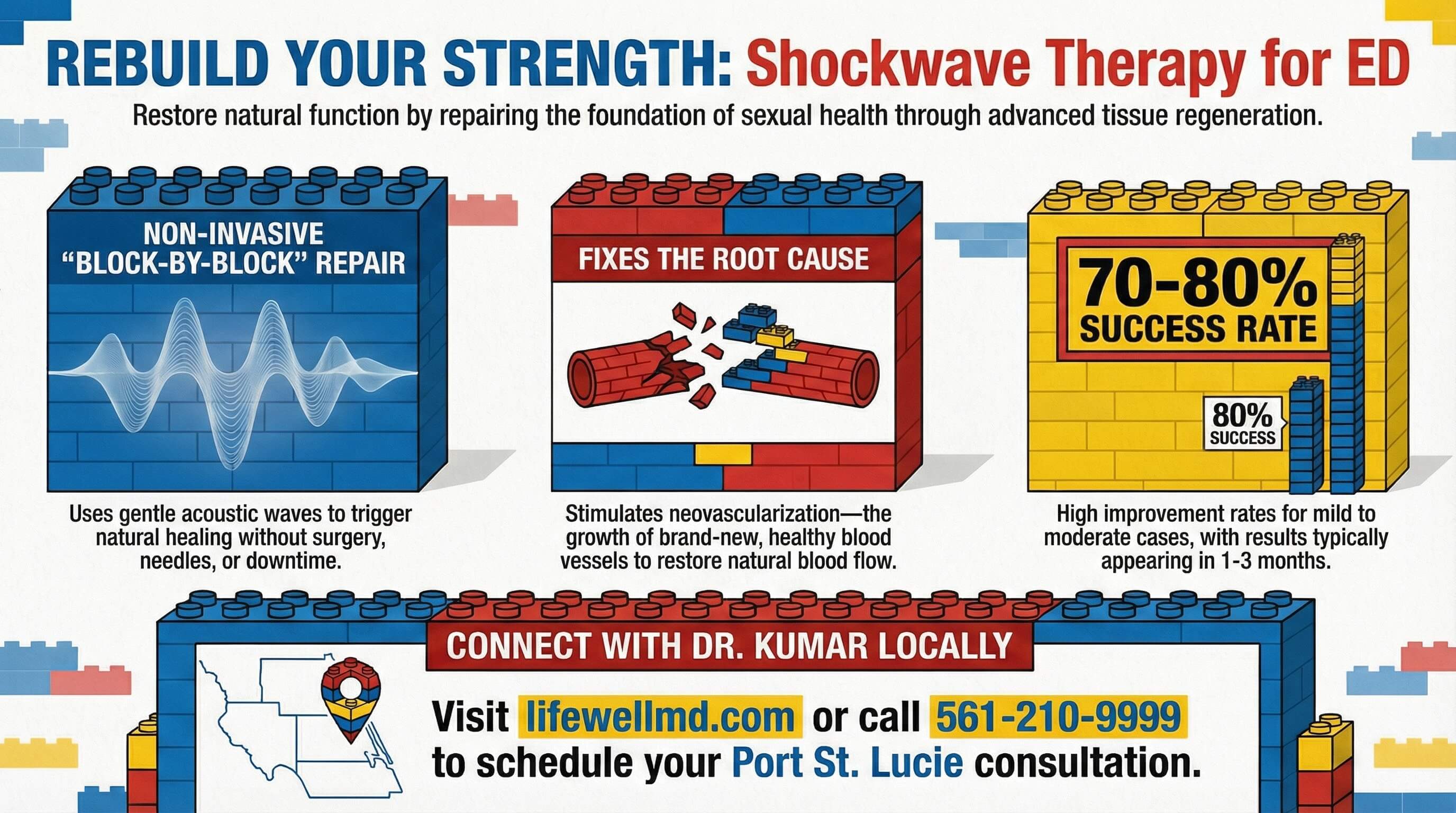
How Shockwave Therapy Works for Erectile Dysfunction
Shockwave therapy works by creating controlled microtrauma and mechanotransduction within the corpora cavernosa and adjacent erectile structures. When low intensity shockwaves penetrate penile tissue, they cause precise cellular disruption that triggers the body’s natural healing process. This is how the therapy work: the microtrauma initiates a cascade of biological responses that promote tissue regeneration and vascular repair.
This controlled injury stimulates the release of angiogenic mediators, including vascular endothelial growth factor (VEGF) and nitric oxide. These biological signals promote neovascularization—the formation of new blood vessels—while enhancing endothelial function throughout the penile vascular system. The result is to improve blood flow and tissue quality, with increased blood flow supporting stronger, more spontaneous erections.
The therapy specifically targets vasculogenic erectile dysfunction, the most common form of ED characterized by compromised penile arterial inflow or endothelial dysfunction. By repairing the vascular substrate rather than temporarily augmenting nitric oxide pathways, shockwave treatments address the root cause of many erectile problems. This is how shockwave therapy work: focused low-intensity pulses stimulate physiological processes like neovascularization, leading to improved blood flow and erectile function.
Clinical studies show this regenerative approach increases blood flow and stimulates new blood vessel growth in treated areas. The induced microinjury activates progenitor cells and promotes smooth muscle rejuvenation, improving cavernosal endothelial health and reducing tissue fibrosis.
Unlike symptomatic treatments that work only during sexual encounters, extracorporeal shockwave therapy restores natural erectile mechanisms that function independently of external aids or medications.
Treatment Procedure and What to Expect
A typical shockwave therapy session is straightforward and patient-friendly. Each treatment lasts about 15-20 minutes and takes place in an outpatient setting without requiring anesthesia or special preparation.
During the procedure, patients remain fully conscious and comfortable while a trained medical professional applies a handheld transducer device to specific areas of the penis. The practitioner uses coupling gel to ensure proper contact and acoustic transmission as they treat the penile shaft, base, and crura (the roots of the penis that extend into the pelvic floor).
The device delivers a prescribed number of acoustic pulses per treatment site at carefully calibrated low-intensity settings. Most patients report only mild sensations during treatment, typically described as gentle tingling or a light tapping feeling. The pain is minimal, and most men find the procedure completely tolerable. Most patients do not experience pain during or after the treatment, and any discomfort is generally mild and manageable.
| Treatment Aspect | Details |
|---|---|
| Duration | 15-20 minutes |
| Anesthesia | None required |
| Pain Level | Minimal to none |
| Recovery Time | Immediate return to activities |
| Preparation | None needed |
Medical providers experienced with urologic shockwave devices ensure accurate targeting and appropriate energy parameters. Because the treatment is non-invasive, patients can return to normal activities immediately after each session, making it convenient for busy schedules.
Treatment Protocol and Number of Sessions
Treatment protocols vary based on ED severity and individual patient factors. Most programs follow established patterns from clinical studies. The standard approach involves multiple sessions over several weeks to allow optimal tissue response and regeneration.
For mild ED cases, protocols typically include about six treatment sessions over 6-9 weeks. Patients with moderate erectile dysfunction often require around twelve sessions within the same timeline. Clinics usually space sessions once or twice weekly to allow the biological healing process to develop between treatments.
Many clinics customize protocols based on individual assessment:
- Mild ED: 6 sessions over 6 weeks
- Moderate ED: 12 sessions over 6-9 weeks
- Severe ED: 12+ sessions with potential additional cycles
Some practitioners combine shockwave therapy with daily low-dose tadalafil (5mg) to enhance outcomes. While promising, this combination remains under active investigation in randomized controlled trials.
In clinical studies evaluating shockwave therapy, researchers often include a placebo group that receives a sham treatment. The sham treatment mimics the procedure without delivering therapeutic shockwaves, allowing for objective comparison between the active therapy and placebo. Outcomes are typically measured by the minimal clinically important difference in erectile function scores, which represents the smallest change that patients perceive as beneficial and indicates meaningful improvement.
The treatment protocol may also include “booster” sessions if initial benefits diminish. This approach recognizes that effects can last months to years, but some patients may need maintenance treatments as vascular disease progresses with age.
Ideal Candidates for Shockwave Therapy
The best candidates for erectile dysfunction shockwave therapy are men with mild to moderate vasculogenic erectile dysfunction who have identifiable vascular causes. This therapy works best when erectile tissue can respond to angiogenic stimulation.
Ideal candidates include:
- Men with ED caused by vascular or endothelial dysfunction
- Patients who haven’t seen satisfactory results with oral medications
- Those seeking to avoid more invasive treatments like injections or implants
- Younger men with physical, not psychological, causes of ED
- Patients without severe cardiovascular disease or advanced diabetes
The therapy shows promise for partial responders to PDE5 inhibitors—men who benefit somewhat from medications like Viagra or Cialis but want more consistent erectile function. Medical centers emphasize proper candidate selection through comprehensive urologic evaluation to match the underlying pathophysiology with shockwave therapy.
Patients with severe ED or significant comorbidities may still be candidates but usually have lower response rates. The selection process includes detailed medical history, physical exam, and specialized tests to confirm vasculogenic causes and rule out contraindications.
Men on anticoagulants or with certain medical conditions may not be suitable, highlighting the need for medical oversight.
Expected Results and Timeline
Clinical outcomes show that shockwave therapy improves standardized erectile function assessments. Most patients who respond experience increases of about 4 points in their International Index of Erectile Function (IIEF-EF) scores, a clinically meaningful change.
Results appear gradually as neovascularization progresses. Most patients notice improvements within 1-3 months after treatment, with continued gains as new vessels mature and tissue remodels.
Success rates vary by ED severity:
| ED Severity | Improvement Rate | Timeline |
|---|---|---|
| Mild | 70-80% | 1-2 months |
| Moderate | ~60% | 2-3 months |
| Severe | ~20% | 3+ months |
Primary outcome measures include IIEF-EF scores, erection hardness, ability to achieve spontaneous erections, and sexual encounter profile scores. Many men report significant improvement in maintaining erections sufficient for sexual activity.
Long-term studies suggest benefits can last 12-24 months or longer in many responders. However, the therapy’s experimental status means optimal maintenance strategies remain under study through ongoing clinical trials and systematic reviews.
It’s important to maintain realistic expectations. Shockwave therapy does not work for everyone. Response rates depend heavily on proper candidate selection and the underlying cause of erectile dysfunction.
Shockwave Therapy vs. Radial Wave Therapy
A critical distinction exists between legitimate low-intensity extracorporeal shockwave therapy and radial wave therapy, often marketed in non-medical settings. This difference affects treatment effectiveness and safety.
True shockwave therapy uses focused acoustic waves that penetrate deeply and have strong clinical evidence. These devices are regulated medical equipment operated by qualified healthcare providers following evidence-based protocols.
In contrast, radial wave therapy uses unfocused pressure waves that affect only surface tissues. These devices are often Class I medical devices not approved for treating erectile dysfunction and lack clinical support.
| Therapy Type | Wave Characteristics | Evidence Base | Regulation |
|---|---|---|---|
| True Shockwave | Focused, deep penetration | Extensive clinical studies | Medical oversight required |
| Radial Wave | Unfocused, surface-level | Limited ED-specific evidence | Minimal regulation |
Cost and Insurance Coverage
Shockwave therapy cost is significant since insurance usually does not cover it due to its experimental status in the U.S. Most clinics charge $500-$750 per session, with full protocols costing $3,000 to $6,000 depending on sessions.
Out-of-pocket expenses reflect the therapy’s investigational status. Although evidence supports its safety and efficacy, regulatory approval for ED treatment is pending. This status excludes it from standard insurance reimbursement.
Patients often compare the finite cost of shockwave therapy against ongoing medication expenses or the one-time cost of invasive treatments. For men paying $100-200 monthly for ED meds, shockwave therapy may prove cost-effective if benefits last.
Many clinics offer payment plans to ease upfront costs. Patients often find the potential to reduce medication dependence worth the investment, especially for restored spontaneity and convenience.
Safety Profile and Side Effects
Low intensity extracorporeal shockwave therapy has an excellent safety record in clinical studies, with minimal adverse effects reported. This profile makes it appealing for men seeking alternatives to medications or invasive treatments.
Common experiences during and after treatment include:
- Mild tingling during pulse delivery
- Temporary slight discomfort at treatment sites
- Rare minor skin irritation
- Occasional light bruising that resolves quickly
Serious adverse effects have not appeared in clinical series when qualified professionals administer therapy using proper protocols. The treatment’s non-invasive, low-energy nature contributes to safety.
However, certain contraindications and precautions apply. Patients on anticoagulants may need special evaluation due to bruising risks. Those with significant cardiovascular disease or major comorbidities require thorough assessment.
The difference between legitimate shockwave therapy and unregulated radial wave treatments also impacts safety. Properly administered shockwave therapy is safe under medical oversight, but unregulated treatments may lack safety protocols and supervision.
Shockwave Therapy vs. Penile Implants: Key Differences to Know
- Non-invasive shockwave therapy offers a painless and comfortable treatment experience without the need for anesthesia or surgical procedures.
- It promotes natural tissue regeneration and improved blood flow, addressing the root causes of erectile dysfunction rather than just masking symptoms.
- Recovery time is minimal, allowing patients to resume normal activities immediately after each session.
- Unlike invasive treatments, shockwave therapy carries a lower risk of complications and side effects.
- This therapy provides a promising alternative for men seeking effective erectile dysfunction treatment without the risks and downtime associated with surgery or injections.
Nitric Oxide Supplement Support to Enhance Shockwave Therapy Effectiveness
Incorporating nitric oxide boosting supplements into the shockwave therapy protocol is crucial for maximizing treatment effectiveness. Nitric oxide plays a key role in vasodilation, helping to relax blood vessels and improve blood flow to the penile tissue. By enhancing nitric oxide levels, these supplements support the neovascularization process stimulated by shockwave therapy, promoting faster and more robust blood vessel growth.
This synergy between shockwave treatment and nitric oxide supplementation can lead to improved erectile function and longer-lasting results. Therefore, combining both approaches optimizes the natural repair mechanisms essential for restoring healthy erectile function.
As a physician, I’ve carefully selected this product for its quality and effectiveness. Secure yours here.
Scheduling Your Consultation
Most patients do not need a referral to consult a urologist about erectile dysfunction. They can schedule an evaluation directly with men’s health programs offering shockwave therapy. The initial consultation involves a comprehensive assessment to determine candidacy and develop a treatment plan.
During the first appointment, urologists review medical and sexual history, assess ED severity using validated questionnaires like the International Index of Erectile Function, and discuss treatment options. This evaluation helps decide if shockwave therapy suits the patient’s goals, health, and risk tolerance.
The consultation includes:
- Complete medical history and physical exam
- Review of current medications and prior treatments
- Assessment using standardized ED questionnaires
- Discussion of expectations and outcomes
- Development of a personalized treatment protocol
Patients should prepare questions about device types, evidence, timelines, durability, adjunctive medications, and outcome measures. Academic centers stress realistic expectations since the therapy remains investigational.
Many university men’s health programs offer shockwave therapy under research protocols. These programs provide access to cutting-edge treatment and contribute to the knowledge base. They also offer comprehensive evaluation and follow-up care.
When scheduling, patients should confirm the clinic uses true low-intensity shockwave devices, not radial wave alternatives. Treatment should be supervised by qualified professionals experienced in sexual medicine and erectile dysfunction.
This structured evaluation ensures proper candidate selection and sets realistic expectations for this promising but investigational treatment that restores erectile function through vascular regeneration.
FAQ:
What Supplements Work Best for Erectile Dysfunction?
Supplements that boost nitric oxide levels, such as L-arginine and citrulline, are commonly used to improve erectile function by enhancing blood flow. Combining these supplements with shockwave therapy may further optimize treatment outcomes for erectile dysfunction.
Ready to make these supplements as part of your life? As a physician, I’ve carefully selected this product for its quality and effectiveness. Secure yours here.
Does Shockwave Therapy Really Work for Erectile Dysfunction?
Clinical studies and randomized controlled trials demonstrate that low intensity shockwave therapy can significantly improve erectile function in men with vasculogenic ED. This therapy promotes neovascularization and tissue regeneration, addressing the underlying causes rather than just symptoms. While results vary, many patients experience lasting benefits within one to three months after treatment.
How Long Does Shockwave Therapy for ED Last?
The effects of shockwave therapy for erectile dysfunction typically last from 12 to 24 months, depending on individual health and severity of ED. Some men may require maintenance or booster sessions to sustain improvements over time. Ongoing research aims to better define the long-term durability of this noninvasive treatment.
What Is the Strongest Treatment for Erectile Dysfunction?
The strongest treatment for erectile dysfunction varies by patient but often includes penile implants for severe cases and PDE5 inhibitors like Viagra for moderate ED. Shockwave therapy offers a promising noninvasive alternative that targets vascular health and can restore natural erectile function. Treatment plans should be personalized based on severity, underlying causes, and patient preferences.
Is Shockwave Therapy or the P Shot Better for ED?
Shockwave therapy and the P shot (platelet-rich plasma injection) are both innovative treatments aimed at improving erectile function through tissue regeneration. Shockwave therapy uses acoustic waves to stimulate blood vessel growth, while the P shot uses growth factors from the patient’s blood to promote healing. Current evidence favors shockwave therapy for vasculogenic ED, but both therapies may be complementary depending on individual cases.
What Are the Negative Side Effects of Shockwave Therapy?
Shockwave therapy is generally safe with minimal side effects, including mild tingling, slight discomfort during treatment, or rare minor bruising. Serious adverse effects are uncommon when performed by qualified professionals using proper protocols. Patients should discuss any concerns with their healthcare provider before starting therapy.
What Is the P Shot for a Man?
The P shot, or platelet-rich plasma injection, involves injecting concentrated platelets from the patient’s own blood into the penile tissue to promote healing and improve erectile function. It aims to stimulate tissue regeneration and enhance blood flow. While promising, more research is needed to establish its efficacy compared to other ED treatments.
Does Vibration Help Erectile Dysfunction?
Vibration therapy may improve erectile function by enhancing blood flow and stimulating nerve activity in the pelvic region. Some studies suggest it can be beneficial as an adjunct treatment for ED, particularly in cases involving nerve damage. However, vibration therapy is not widely established as a standalone treatment for erectile dysfunction.
Is Shockwave Therapy Worth It?
For men with mild to moderate vasculogenic ED, shockwave therapy offers a noninvasive, drug-free option with the potential for lasting improvement. Many patients find the therapy worthwhile due to its safety profile and ability to restore natural erectile function. Consultation with a qualified urologist can help determine if shockwave therapy is the right choice.
Is Shockwave Therapy for ED Covered by Insurance?
Currently, shockwave therapy for erectile dysfunction is considered experimental and is typically not covered by insurance plans. Patients usually pay out-of-pocket for treatment sessions, which may range in cost depending on the provider and number of sessions. It is important to discuss costs and payment options with your healthcare provider before starting therapy.
Conclusion
Erectile dysfunction shockwave therapy marks a major advance for men with vasculogenic ED. By targeting vascular pathophysiology instead of symptoms, it offers potential for natural erectile function without ongoing medication.
Growing evidence supports low-intensity extracorporeal shockwave therapy as effective for selected patients. Its safety, non-invasive nature, and lasting benefits make it a valuable option for men seeking alternatives to traditional ED treatments.
While still experimental and requiring more research on protocols and durability, current data support its use for mild to moderate vasculogenic ED. Success depends on proper candidate selection, qualified medical treatment, and realistic expectations.
Men considering this treatment should consult qualified urologists experienced in sexual medicine. Medical evaluation ensures appropriate candidacy and realistic expectations about benefits.
As research advances and protocols improve, shockwave therapy may become a cornerstone for restoring natural sexual function through tissue regeneration rather than temporary symptom relief.
Final Word:
Still have questions about whether shockwave therapy for erectile dysfunction is right for you? Whether you’re struggling with persistent ED, seeking alternatives to medication, or curious about how this innovative, non-invasive treatment can restore your natural erectile function, Dr. Kumar is here to help.
As an expert functional medicine physician and a proud member of the Androgen Society and the International Society for Sexual Medicine (ISSM), Dr. Kumar stays at the forefront of the latest research and cutting-edge technologies in sexual health. His patient-centered approach ensures you receive personalized care tailored to your unique condition, with treatment plans designed to improve blood flow, regenerate tissue, and enhance erectile function for lasting results.
Join the many men who have regained confidence and spontaneity through Dr. Kumar’s expert guidance and advanced shockwave therapy treatments. Don’t wait—take advantage of this opportunity to reclaim your sexual health today. Call Dr. Kumar’s office at 561-210-9999 to schedule your consultation and experience the difference that specialized, research-driven care can make.
Act now—appointments with Dr. Kumar fill quickly due to high demand. Be among the empowered patients transforming their lives with proven, non-invasive therapy. Your journey to renewed vitality and improved erectile function starts here.
Discover why hundreds of patients in Port St. Lucie and the Treasure Coast trust Dr. Kumar, whose expertise and compassionate care have earned him top ratings on Healthgrades and WebMD. Call today and join a community committed to living life fully and confidently once again.
Please check out his 120 five star reviews on Healthgrades and his 136 five star reviews at WebMD.
