

The Promise That Changed Everything
I was 15 years old, sitting across from the man who had become our family’s anchor after my father died.
The Reality of Loss and System Failure
My brother-in-law, Mr. H, was going to the hospital the next morning. We both knew he wasn’t coming home. Testicular cancer was taking him—not because it couldn’t be treated, but because the system saw him as a case number, not as the person who provided for my widowed mother, my sister, and her two young children.
I rode my scooter through the streets of India, taking him to treatments. I watched him disappear a little more each day. In desperation, I begged the doctors: “Take my liver. Take my organs. Any of them. Just get him to live.”
They couldn’t. Or wouldn’t. The system failed him.
A Defining Moment: A Promise to Change
That night at our final dinner, sitting in the weight of what was coming, something crystallized inside me. Not anger. Not just grief. A calling.
I would spend my life ensuring no family faced what we faced. I would become the physician who saw the whole person—who treated cancer without sacrificing the patient to the treatment.
A Life Dedicated to Compassionate Expertise
That promise has shaped 40 years of my life: medical school, radiation oncology residency, board certification, building six cancer centers across Florida, teaching at UC Irvine and City of Hope Medical Center, and finally, training at Harvard Medical School in integrative medicine.
But here’s what I’ve learned: expertise without compassion is just technique. Compassion without expertise is just sentiment.
You need both. That’s what LifeWell MD was built to provide.
Understanding Cancer

Cancer is not a single disease but a complex group of conditions marked by uncontrolled growth and spread of abnormal cells. These cells invade nearby tissues and disrupt organ function, making cancer a leading cause of illness and death worldwide. Cancer results from genetic predispositions, environmental exposures, and lifestyle choices such as tobacco use, infections, and radiation.
Understanding the Impact of a Cancer Diagnosis
For cancer patients, understanding their cancer diagnosis is the first step toward empowerment. A cancer diagnosis often brings significant emotional and physical stress, impacting patients’ well-being and their ability to cope.
The Holistic Approach of Integrative Oncology
Integrative oncology addresses not only the physical aspects of cancer but also the emotional and spiritual challenges. Moreover, it emphasizes the importance of communication between patients and healthcare providers. By focusing on the whole person, integrative oncology seeks to optimize clinical outcomes and enhance quality of life throughout the cancer journey.
Managing Cancer Recurrence and Survivorship
Since the risk of cancer recurrence is an ongoing concern, integrative oncology provides prevention strategies and ongoing support to help patients manage this challenge. This approach recognizes that healing involves more than treating disease—it supports the patient as a whole, including cancer survivors, by offering supportive therapies such as yoga, acupuncture, and lifestyle modifications.
The Goal of Integrative Oncology
Ultimately, integrative oncology aims to support overall well-being, enhance traditional treatments, and improve quality of life through evidence-based, patient-centered practices. In short, this holistic approach combines mainstream oncology with complementary therapies to deliver comprehensive cancer care.
What Makes Integrative Medicine and Integrative Oncology Different
Let me be direct: integrative oncology isn’t about choosing between conventional medicine—standard, evidence-based treatments like chemotherapy and radiation—and “natural” approaches. That false choice has harmed many patients. Relying solely on alternative therapies can delay effective cancer therapies, increase costs, and provide false hope. Conversely, evidence-based integrative approaches safely support and enhance standard care as part of a comprehensive, patient-centered approach to cancer treatment. An integrative oncology program combines conventional medicine with evidence-based complementary therapies to improve quality of life, manage symptoms, and provide holistic support throughout the cancer care continuum.
What is Integrative Oncology?
Integrative oncology is a patient-centered, evidence-informed field of comprehensive cancer care. It engages patients and families as active participants throughout the cancer continuum—from prevention and diagnosis to treatment, survivorship, and palliative care. This engagement optimizes health promotion. More than 80% of patients with cancer use complementary and alternative medicine, highlighting the importance of integrating these approaches responsibly.
Complementary Medicine vs. Alternative Therapies
Real integrative oncology precisely coordinates evidence-based conventional cancer treatments with evidence-based complementary therapies. These are delivered by physicians deeply knowledgeable in oncology. Complementary medicine refers to therapies used alongside standard treatments to improve well-being and outcomes within an integrative framework. It combines mind-body practices and lifestyle modifications with conventional cancer treatments.
Importantly, complementary treatments integrate with conventional care, unlike alternative therapies, which replace proven treatments and may pose risks.
The Role of the Society for Integrative Oncology
Founded in 2003, the Society for Integrative Oncology supports evidence-informed practice and emphasizes rigorous scientific research.
Acupuncture in Integrative Oncology
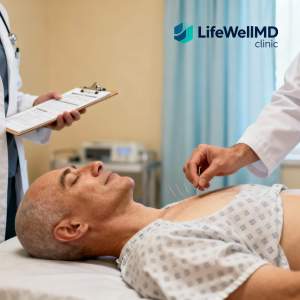
Acupuncture involves the insertion of fine needles at specific points on the body, a practice rooted in ancient Chinese medicine. Its mechanisms of action are thought to include modulation of the nervous system, release of endorphins, and improvement of blood flow. In cancer care, acupuncture is recommended for managing symptoms such as pain, fatigue, hot flashes, and chemotherapy induced nausea. Randomized controlled trials have demonstrated the safety and efficacy of acupuncture for symptom relief in cancer patients.
The goal is simple but profound:
- Prepare your body before treatment
- Protect you during treatment
- Restore your vitality after treatment
Dietary adjustments, such as increasing fruits and vegetables while reducing red meat and processed foods, are key for cancer patients.
Most cancer centers excel at killing cancer. We focus on strengthening you.
The Precision Healing Trinity: Prepare, Protect, Restore
After treating over 10,000 cancer patients and studying conventional oncology’s successes and limits, I identified three critical windows where evidence-based integrative care transforms outcomes. This approach aims to optimize health, quality of life, and clinical results throughout the cancer care journey.
Programs combine conventional treatments with supportive interventions such as nutrition, acupuncture, and lifestyle changes. The focus is on safely integrating complementary therapies with standard care, using the best available evidence and clinical expertise to improve patient outcomes and well-being.
🌱 Prepare: The Optimization Phase
The Window: 2-4 weeks before treatment
The Philosophy: Preparing You for Treatment
Your oncologist plans a powerful assault on your cancer. But who prepares you? Like elite athletes, you must optimize nutrition, recovery, metabolic conditioning, and mental readiness. Cancer treatment demands this approach. You become an active participant in your supportive care plan, improving outcomes through shared decision-making.
What Happens: Assessment and Pre-Treatment Protocol
We assess your metabolic state, nutrition, immune function, and stress resilience. Then, we build your protocol to prepare you for treatment:
- Cellular Energy Optimization: IV NAD+ therapy enhances mitochondrial function.
- Immune Architecture: Mistletoe extract strengthens immune resilience.
- Nutritional Scaffolding: Precision nutrition tailored to your cancer type and needs.
- Mind-Body Fortification: Evidence-based techniques reduce anxiety and depression. Integrative oncology offers acupuncture, massage, and nutritional counseling to support patients holistically. Massage therapy reduces fatigue, pain, mood disturbances, and lymphedema. Mindfulness-based interventions and yoga have robust evidence for stress management. Yoga therapy addresses physical, emotional, mental, and spiritual health comprehensively.
Preparing before treatment helps manage symptoms and improve quality of life as therapies begin.
The Difference: Benefits of Preparation
Patients entering treatment optimized experience fewer side effects, better tolerance, and often superior outcomes. One patient said, “I watched others suffer terribly in chemo. I felt tired but not as much as I feared. Preparation made the difference.”
That’s not luck. That’s preparation meeting science.
🛡️ Protect: The Guardian Phase
The Window: During Active Treatment
During chemotherapy, radiation, or immunotherapy, patients face side effects like nausea, neuropathy, fatigue, pain, and immune suppression. Supportive care helps manage symptoms and maintain quality of life.
The Philosophy: Minimizing Treatment Side Effects
While oncologists focus on eliminating cancer, integrative oncology reduces treatment collateral damage. Many side effects are preventable or reducible through evidence-based complementary therapies and lifestyle changes.
What Happens: Personalized Coordination
Interventions coordinate with your treatment schedule. Chemotherapy regimens, radiation doses, and labs are reviewed to ensure safe, effective supportive therapies. Some interventions are avoided on treatment days; others provide targeted benefits.
The Protective Protocol: Evidence-Based Interventions
- High-Dose IV Vitamin C reduces chemotherapy toxicity without compromising anti-cancer effects.
- Harvard-Trained Medical Acupuncture lessens nausea, pain, neuropathy, and radiation side effects, supported by trials and reviews.
- Targeted Neuroprotection with L-Glutamine reduces chemotherapy-induced peripheral neuropathy by 30-40%.
- Mistletoe Therapy supports immune modulation and symptom management.
- Cellular Defense with IV glutathione and N-acetylcysteine protects healthy tissues.
Patient Results: Real-World Success
Patients like Sarah, who completed stage III colon cancer chemotherapy with minimal nausea and no neuropathy, show integrative oncology’s effectiveness. Such outcomes improve treatment tolerance and quality of life.
⚡ Restore: The Renaissance Phase
The Window: After Treatment Ends
After treatment ends—when others say “you’re done”—many survivors face challenges that conventional oncology overlooks.
The Philosophy: Survival Isn’t Enough
You fought for these years. They should feel worth living. Symptoms like neuropathy, weight gain, brain fog, hormonal imbalance, and fatigue are common but treatable.
Persistent Symptoms and Impact
Symptoms such as insomnia, pain, fatigue, and anxiety often persist despite standard care. Sleep disturbances are prevalent, needing therapies like cognitive behavioral therapy for insomnia. Expressive therapies like art and music therapy aid emotional processing and pain relief.
Integrative Therapies for Recovery
Yoga and similar therapies improve quality of life and emotional health in cancer patients and survivors, as recent trials show.
What Happens: Systematic Rebuilding
We address root causes with:
- Hyperbaric Oxygen Therapy for radiation tissue damage
- Mitochondrial Restoration via advanced IV protocols
- Hormone Reconstruction for endocrine function
- Infrared Light Therapy for fatigue, neuropathy, and pain
- Neuropathy Reversal with supplements like American ginseng and alpha-lipoic acid
Patient Results: Thriving Beyond Survival
Patients like Michael, debilitated post-treatment, regained energy, reduced neuropathy, normalized hormones, and returned to active lives after Restore protocols.
That’s the difference between surviving and thriving.
Nutrition and Cancer
Nutrition is key to cancer prevention and survivorship. Research shows diets rich in colorful fruits, vegetables, whole grains, and lean proteins reduce risk and support the body during and after treatment. Conversely, diets high in processed foods, sugars, and unhealthy fats may increase cancer risk and recurrence.
Integrative oncology prioritizes nutrition counseling as part of comprehensive care. Patients get personalized guidance to support their unique needs and goals.
Certain nutrients, like antioxidants and omega-3 fatty acids, show anti-cancer properties. Adequate vitamin D may reduce recurrence risk. Empowering patients to adopt healthy eating supports prevention and wellness.
Exercise and Physical Activity
Physical activity is a powerful tool for cancer prevention and improving the lives of those diagnosed with cancer. Regular exercise lowers the risk of certain cancers, including breast cancer, lung cancer, and colon cancer. Additionally, it helps cancer patients manage symptoms, reduce fatigue, and enhance quality of life. Evidence from randomized controlled trials and randomized trials demonstrates that exercise interventions, such as tai chi and yoga, can significantly improve symptoms and quality of life for cancer patients, including those with breast cancer and lung cancer.
Integrative oncology programs often include exercise and movement therapies—such as yoga, tai chi, and structured walking programs—tailored to each patient’s abilities. These activities support physical health, manage stress, improve mood, and foster empowerment. For cancer patients, staying active is crucial to maintaining quality of life and aiding recovery throughout the cancer care continuum. Notably, tai chi improves balance and reduces falls in those who may be at risk, and has shown benefits comparable to physical therapy for improving mobility and symptoms, making it a valuable part of integrative care plans.
Care Team Collaboration
High-quality cancer care relies on seamless collaboration among diverse healthcare professionals. In integrative oncology, oncologists, nurses, social workers, and integrative therapy practitioners work together to create coordinated, patient-centered treatment plans.
Effective communication ensures all patient needs—medical, emotional, and supportive—are addressed. Many major cancer centers have established complementary therapies to manage immediate and delayed cancer-related symptoms, enhancing comprehensive care.
The Society for Integrative Oncology (SIO) provides evidence-based guidelines and resources to help care teams deliver optimal outcomes. When care teams collaborate, patients experience better symptom management, fewer side effects, and improved quality of life. This team-based approach lies at the heart of integrative oncology, ensuring comprehensive, compassionate care.
Why Board Certification in Oncology Matters for Cancer Treatment
Let me be clear.
The Importance of Credentials in Cancer Care
If you’ve searched online for integrative cancer support, you’ve encountered practitioners with various credentials and promises. Some may have helped patients; others may mean well. Communicating about complementary therapies helps manage expectations and guide patients to safe, effective care. Unmet symptom needs and a desire for holistic health motivate many to seek complementary and alternative medicine. However, quality control issues with natural products and herbal supplements pose risks due to contamination and inaccurate labeling. Therefore, trusted sources and professional guidance are essential. Despite limited evidence that complementary therapies alter cancer outcomes, many patients use them, underscoring the need for evidence-based guidance.
My Unique Qualifications
Credentials matter greatly in cancer care. Here’s why I offer what others cannot:
20 Years Treating Cancer Patients: I’ve managed chemotherapy, radiation, immunotherapy complications, and complex surgical cases. I know oncology inside out—the mechanisms, interactions, timing, and risks.
Board Certification in Radiation Oncology: Verified by the American Board of Radiology after 3-5 years of intense training and comprehensive exams. License ME64816 through the Florida Board of Medicine—you can verify this quickly.
Harvard Medical School Training: One of 80 physicians worldwide selected for the Medical Acupuncture Program, receiving formal training in evidence-based integrative approaches from a top institution.
The Rare Combination of Expertise
Most oncologists don’t pursue integrative training; most integrative practitioners lack oncology residency. Being both is exceptionally uncommon. As an integrative oncology specialist, I support patients to reduce side effects, improve recovery, and strengthen the body throughout treatment.
What This Means for You
When I recommend high-dose IV vitamin C, I know which chemotherapy agents it enhances or interferes with. When suggesting supplements, I review pharmacokinetics against your regimen. I time interventions around treatment, understanding critical metabolic windows. My recommendations rely on clinical practice, ensuring safety and improved outcomes.
This precision keeps you safe while enhancing results.
What to Expect: Your LifeWell MD Experience
Before You Schedule
The Seva Principle: You receive value before investing.
Learn which supplements are safe during chemo. Understand what research shows about diet and cancer. Discover how acupuncture helps neuropathy. Our guide clarifies safe, evidence-based complementary treatments versus unproven or alternative therapies. We explain complementary medicine’s role in integrative oncology and how it safely complements standard care to enhance well-being.
Your Initial Consultation (90 Minutes)
This is not a sales meeting. It’s the start of understanding your full story. You’ll meet an integrative oncology specialist who supports reducing side effects, improving recovery, and strengthening your body during all treatment stages.
We’ll Cover:
- Your Complete Cancer Journey: Diagnosis, pathology, treatment plans, symptoms, and tolerance.
- Your Complete Health Context: Conditions, medications, family history, lifestyle—everything matters.
- Your Actual Goals: What truly matters to you—finishing treatment with dignity, being present for loved ones, resuming hobbies, restoring intimacy. Your goals guide protocols.
- The Evidence-Based Plan: Which phase (Prepare, Protect, Restore) fits your needs, specific interventions, coordination with your oncology team, timeline, and clear costs.
What Makes This Different:
You spend 90 minutes with me personally—a board-certified oncologist with 30 years’ experience—not a physician assistant reading protocols. This time is yours. Bring questions. Challenge recommendations. This is your life optimized.
After the Consultation: Enhancing Quality of Life
If We’re the Right Fit:
We coordinate immediately with your oncology team. I send notes to your medical oncologist. Most oncologists appreciate a board-certified colleague managing integrative care—someone who understands oncology and avoids dangerous interactions.
We schedule your first therapeutic sessions based on your treatment timeline.
If We’re Not the Right Fit:
I’ll be honest. There are occasions when you need different resources. The timing may not be right, or expectations might not align with evidence. I’d rather be direct than waste your time and money.
Investment and Access in Cancer Care
The Honest Conversation About Cost
LifeWell MD operates outside insurance by design. This lets me spend 90 minutes with you instead of 10. It allows recommending the best interventions, not just covered ones. It ensures actual physician care, not delegation.
Costs:
- Initial Consultation: $399
- Monthly Protocols: $800–2,500 depending on phase and intensity
- Individual Therapies: $150–400 per session
- Device Therapies: $75–200 per session
Context:
A single hospitalization for chemotherapy complications costs $15,000–40,000. Patients who can’t complete treatment due to side effects risk worse outcomes and survival.
Our protocols help you complete treatment with better tolerance and recover with improved function. Most patients find this a valuable investment compared to unmanaged side effects’ medical and personal costs.
I provide full financial clarity before commitment.
Limited Availability (Here’s Why)
Each protocol requires significant personal physician time—not just appointments, but reviewing labs, coordinating with oncology teams, adjusting protocols, and being available for questions.
Due to this depth, I accept few new patients each quarter. This is operational reality, not marketing.
Current availability: 3–4 weeks.
Additional Resources
Bringing Integrative Oncology Expertise to Our Community
Patients have access to many resources supporting all cancer journey stages. Leading organizations like the National Cancer Institute, American Cancer Society, and MD Anderson Cancer Center offer reliable information on prevention, treatment, survivorship, clinical trials, and supportive care.
Cancer centers such as MD Anderson Cancer Center and UCLA provide coordinated care blending conventional treatments with complementary medicine, serving as models for comprehensive integrative oncology programs.
Supportive care services—including acupuncture, massage therapy, and mindfulness-based stress reduction—improve clinical outcomes and quality of life. Online support groups, educational materials, and integrative therapy services help patients and families navigate cancer’s challenges. Exploring these resources empowers patients to actively participate and optimize health.
Your Next Step Is Simple
You don’t need to travel to major centers for comprehensive, evidence-based integrative oncology care. Dr. Kumar brings top-tier expertise and personalized care directly to our community, offering excellent results through tailored, compassionate treatment plans.
If you or a loved one faces cancer and want more than conventional oncology alone, here’s what to do:
Call: (561) 210-9999
Bring:
- Recent oncology consultation notes
- Pathology reports
- Current treatment plan
- List of medications and supplements
- Your questions
You’ll receive:
- 90 minutes with Dr. Kumar personally
- Complete case review
- Clear explanation of evidence-based options
- Honest assessment of helpful interventions
- Coordination plan with your oncology team
- Transparent costs before commitment
Serving:
North Palm Beach | Palm Beach Gardens | Jupiter | Port St. Lucie | Fort Pierce | Stuart | Vero Beach | Florida’s Treasure Coast
The Promise, Fulfilled
Forty years ago at that final dinner with Mr. H, I made a promise.
I couldn’t save him. The system failed him. But I built something different—a practice where cancer patients receive both Harvard-trained precision medicine and family-centered compassion.
Where treatment doesn’t mean suffering.
>>Where survival means thriving.
>Where board-certified expertise meets genuine healing.
That’s LifeWell MD.
You prepared for your career, family, and life. Now prepare for treatment.
You protected those you love. Now let us protect you.
You’ve given everything to survive. Now restore what treatment took.
The years you’re fighting for deserve to feel worth living.
Let’s make sure they do.
Dr. Ramesh Kumar, MD
Board-Certified Radiation Oncologist | Harvard-Trained Integrative Medicine Physician
Medical Disclaimer: Information provided is for educational purposes and does not constitute medical advice.ided is for educational purposes and does not constitute medical advice. Integrative oncology services complement, not replace, conventional cancer treatment. All patients should maintain care with their primary oncology team. Individual results vary.
© 2025 LifeWell MD. All Rights Reserved.
Address:
LifeWell MD Integrative Oncology
1201 US 1, Suite 23B
North Palm Beach, FL 33408
Dr. Kumar’s Credentials:
Florida Medical License: ME64816
Board Certification: American Board of Radiology
Medical Acupuncture Certification: Harvard Medical School Medical Acupuncture Program
