
The Silent Side Effect: Reclaiming Intimacy After Prostate Surgery
A man sits across from me in my North Palm Beach clinic. He’s 62. Retired airline pilot. Beat prostate cancer six months ago. His PSA is undetectable. His oncologist is thrilled. But Robert won’t make eye contact. “Dr. Kumar,” he says quietly, “they saved my life. But I don’t feel like a man anymore.” His wife squeezes his hand. I look at his post-surgical records. Nerve-sparing prostatectomy. No complications. Textbook success. Except for one devastating detail his surgeon called “expected”: complete erectile dysfunction. He has lost spontaneous erections, without any response to Viagra, and lacks intimacy with his wife of 38 years.His cancer is gone. But part of him died on that operating table.
The Invisible Wound
Prostate surgery saves lives.
Every year, over 200,000 American men undergo radical prostatectomy for prostate cancer. The survival rates are extraordinary. The surgical techniques have advanced dramatically. The oncological outcomes are excellent.
But there is a cost no one adequately prepares you for.
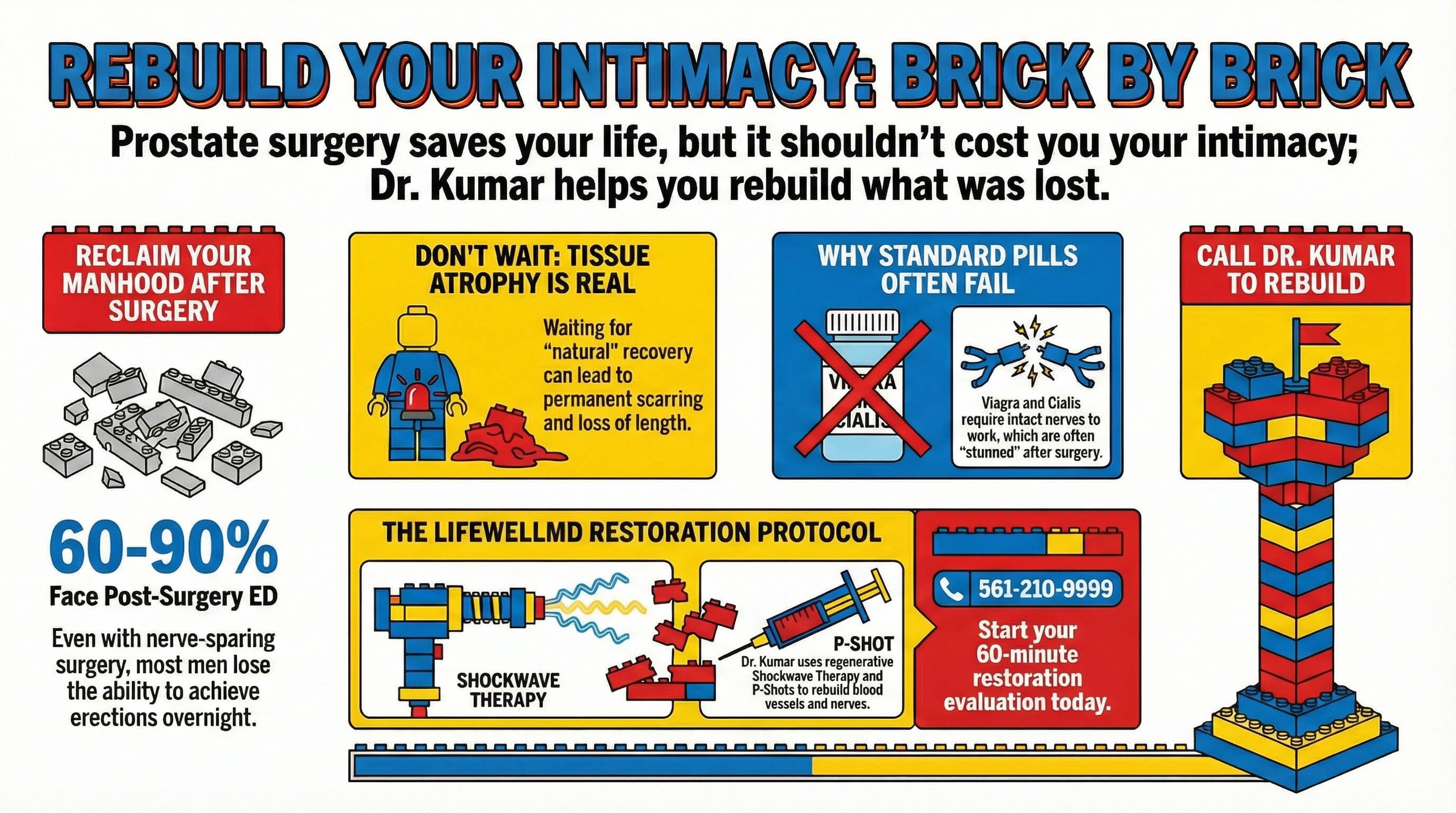
Erectile dysfunction affects 60-90% of men after prostatectomy, even with nerve-sparing techniques. The numbers vary based on age, surgeon skill, and cancer stage, but the outcome is consistent: your ability to achieve and maintain erections vanishes overnight.
This is not a “lifestyle and vanity issue.” Do not simply accept as part of getting older. women’s sexual health solutions.
This is a physiological and psychological trauma that affects nearly every patient post-prostatectomy.
The medical establishment treats it as collateral damage. An acceptable trade-off. “You’re alive, aren’t you?” they say. As if survival and quality of life are mutually exclusive.
I reject that false choice.
The Identity Crisis No One Discusses
Sexual function is intertwined with masculine identity at a fundamental level. When that capacity disappears suddenly—not gradually through aging, but abruptly through surgery—men experience a profound sense of loss.
Depression rates among post-prostatectomy patients with persistent ED exceed 40%. Anxiety disorders spike. Marriages suffer. Men withdraw from social engagement.
I see this every week in my Port St. Lucie and North Palm Beach offices. Successful professionals—executives, physicians, attorneys—who survived cancer but cannot survive the loss of intimacy with their partners.
The invisible wound is often more devastating than the visible scar.
The Cycle of Decline
Your urologist tells you to “give it time.”
Maybe you get a prescription for Viagra or Cialis. “Try this in a few months,” they say. “Nerves take time to heal.”
So you wait. Three months. Six months. You try the pill. Nothing happens. Your doctor increases the dose. Still nothing.
This passivity creates a catastrophic cascade.
Penile Atrophy: The Hidden Emergency
Here’s what your surgeon didn’t tell you:
Your penis requires regular oxygenation to maintain tissue health. Healthy men experience 3-5 nocturnal erections per night during REM sleep. These erections aren’t about arousal—they’re about tissue oxygenation.
When the nerves responsible for erections are damaged during surgery, nocturnal erections cease. Without regular oxygen-rich blood flow, the smooth muscle tissue inside the corpora cavernosa begins to die. Collagen replaces healthy tissue. Scar tissue forms. For those exploring supportive therapies to aid in overall wellness and recovery after surgery, acupuncture may offer several benefits.
This process is called penile fibrosis.
The result: permanent loss of length (average 1-2 cm), loss of girth, curvature, and increasingly rigid scar tissue that makes future erections even more difficult to achieve.
This happens silently. Invisibly. While you’re “giving it time.”
When PDE-5 Inhibitors Fail
Viagra, Cialis, and similar medications (PDE-5 inhibitors) work by enhancing the effect of nitric oxide, which relaxes smooth muscles in the penis and increases blood flow.
But here’s the problem: they require intact nerve pathways to work.
If your cavernous nerves suffered significant trauma during surgery—even with “nerve-sparing” technique—PDE-5 inhibitors have nothing to enhance. The signal never reaches the tissue.
You try the pill. Nothing happens. You try again. Nothing. Your anxiety increases. Performance anxiety layers on top of physiological dysfunction.
This psychological barrier “locks in” the ED, creating a self-reinforcing cycle of failure and avoidance.
Eventually, you stop trying. Your partner stops initiating. Intimacy dies quietly.
The Cost of Medical Passivity
Standard urology follow-up focuses on oncological outcomes: PSA levels, cancer recurrence, urinary continence.
Sexual function? “We’ll address that if the pills don’t work.”
By the time you’re referred to a specialist—if you’re referred at all—irreversible tissue damage has already occurred. The critical window for intervention has closed.
This is medical malpractice by omission.
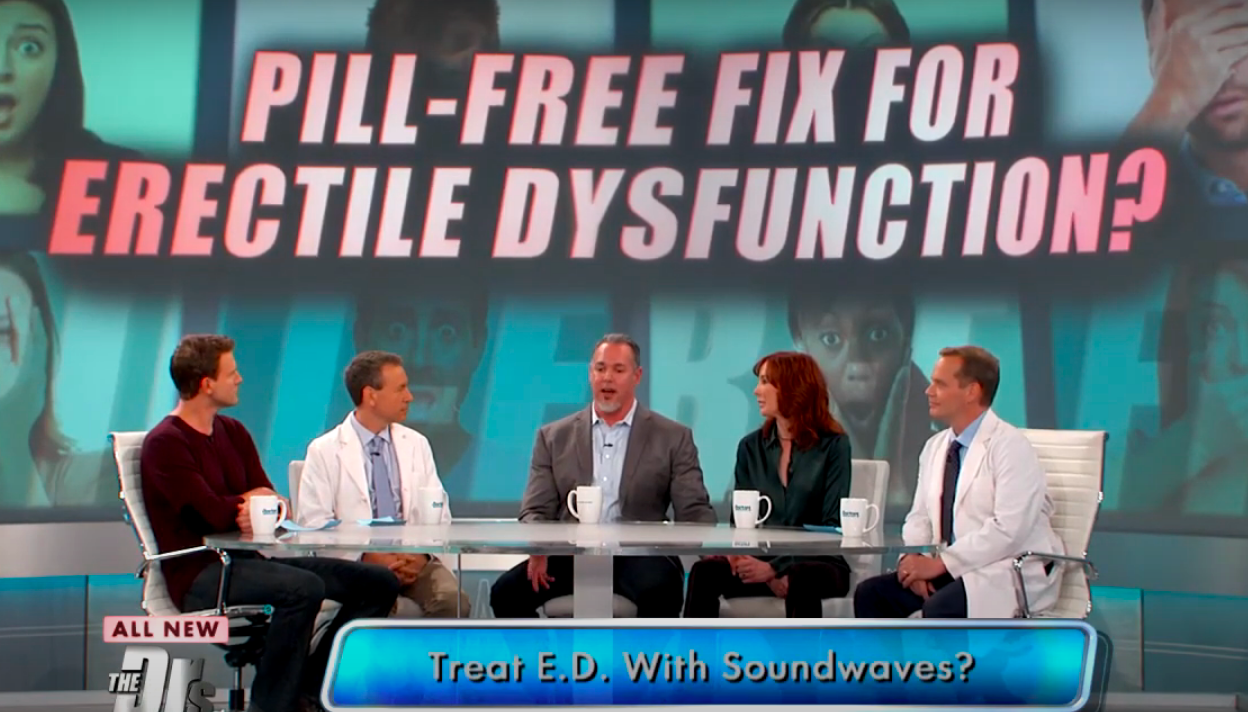
Dr. Kumar explains why post-prostatectomy ED is reversible with early intervention and how regenerative therapy rebuilds what surgery damaged
The LifeWellMD Restoration Protocol
I approach post-prostatectomy ED differently than traditional urology.
We don’t “manage” erectile dysfunction. We rehabilitate penile function.
This requires understanding that ED after prostate surgery is not a single problem—it’s a cascade of interconnected issues: nerve trauma, vascular damage, tissue hypoxia, smooth muscle fibrosis, and psychological barriers.
Standard medicine treats one element. We address all of them simultaneously.
Step 1: Precision Diagnostics
Before we treat anything, we measure everything.
Your post-surgical evaluation at LifeWellMD includes:
Comprehensive Hormone Panel: Total testosterone, free testosterone, estradiol, DHEA, prolactin, thyroid function. Low testosterone after prostate surgery is extremely common and compounds ED. We optimize hormones first.
Vascular Assessment: Penile Doppler ultrasound to measure blood flow velocity and arterial function. This distinguishes nerve damage from vascular insufficiency.
Neurological Evaluation: Testing for any residual cavernous nerve function using pharmacological stimulation. Even partial nerve recovery changes our treatment strategy.
Tissue Health Analysis: Assessing the degree of fibrosis, length loss, and curvature that has already occurred.
Psychological Screening: Depression, anxiety, and relationship impact assessment. We treat the whole person, not just the organ.
Most urologists skip this comprehensive workup. They prescribe a pill and hope for the best.
We engineer your recovery based on objective data.
Step 2: Regenerative Synergy
Once we understand your specific physiology, we deploy multiple regenerative modalities simultaneously.
Shockwave Therapy (Li-ESWT): Low-intensity extracorporeal shockwave therapy delivers acoustic waves directly to penile tissue. This triggers angiogenesis—the formation of new blood vessels. Studies show 60-70% improvement in erectile function scores when combined with other therapies. We typically perform 6-12 sessions over 6-8 weeks.
P-Shot (Platelet-Rich Plasma Therapy): We extract your own platelets, concentrate the growth factors, and inject them directly into the corpora cavernosa and glans. PRP releases VEGF (vascular endothelial growth factor), PDGF (platelet-derived growth factor), and other healing proteins that repair damaged neural pathways and improve tissue elasticity. This is not experimental—this is cutting-edge regenerative medicine with peer-reviewed evidence.
Bocox (Penile Botox): Botulinum toxin injected into the corpus cavernosum relaxes the smooth muscle, reducing the resistance to blood inflow. This allows maximum engorgement during rehabilitation exercises and improves response to other treatments. Duration: 3-6 months per treatment.
Intracavernosal Injections (Trimix): A customized blend of alprostadil, papaverine, and phentolamine injected directly into the penis. This bypasses the nervous system entirely, producing reliable erections regardless of nerve damage. We use this both therapeutically (to maintain tissue oxygenation) and functionally (to restore intimacy while other treatments take effect).
Testosterone Optimization: If your testosterone is suboptimal, we restore it to high-normal levels using bioidentical testosterone therapy. Adequate testosterone is essential for maintaining penile tissue health, libido, and overall sexual confidence.
Step 3: Psychological Integration
Physical healing without psychological recovery is incomplete.
We provide expert sexual health counseling to address:
-
Performance anxiety and fear of failure
-
Relationship communication and partner involvement
-
Realistic expectation setting and milestone celebration
-
Strategies for non-penetrative intimacy during recovery
Your partner is welcome—encouraged—to participate in consultations. Sexual function is a couples’ issue, not an individual problem.
Post-Surgical ED: The Biological Reality
Let me explain exactly what happened during your surgery.
The Cavernous Nerve Anatomy
The cavernous nerves branch from the pelvic plexus and run directly along both sides of the prostate gland. These nerves carry the signals that trigger erections.
During radical prostatectomy, the surgeon must dissect the prostate away from surrounding tissue. Even with “nerve-sparing” technique—where the surgeon attempts to preserve these nerves—trauma is nearly inevitable.
The nerves can be:
-
Stretched (causing temporary dysfunction)
-
Thermally injured (from cautery used to control bleeding)
-
Partially severed (permanent damage to some nerve fibers)
-
Completely severed (worst-case scenario)
Neuropraxia: The State of Hibernation
In many cases, the nerves aren’t destroyed—they’re stunned.
This condition, called neuropraxia, means the nerve is structurally intact but functionally inactive. Like a telephone line that’s connected but carrying no signal.
Recovery from neuropraxia takes time—anywhere from 6 months to 2 years. But recovery is not guaranteed, and waiting passively reduces your chances significantly.
Active rehabilitation during this hibernation period dramatically improves final outcomes.
Vascular Compromise
Even if nerves recover, vascular damage can prevent erections.
The internal pudendal arteries supply blood to the penis. Surgical manipulation, scar tissue formation, and radiation therapy (if used) can all compromise arterial flow.
This is why comprehensive diagnostics matter. Nerve damage requires different treatment than arterial insufficiency.
The Rehabilitation Timeline
Recovery from post-prostatectomy ED is not linear. It’s not passive. And it’s not guaranteed without intervention.
Phase 1 (0-6 Months): The Critical Window
Goal: Prevent tissue hypoxia and fibrosis
This is the most important phase—and the one most urologists ignore.
Immediately after catheter removal (typically 7-14 days post-surgery), we begin penile rehabilitation:
-
Daily PDE-5 inhibitors: Low-dose tadalafil (Cialis) 5mg daily, not for erections but for maintaining tissue oxygenation
-
Vacuum erection devices: 10 minutes daily to mechanically draw blood into the penis
-
Intracavernosal injections: Twice weekly to produce therapeutic erections and prevent atrophy
These aren’t about sexual activity. They’re about keeping tissue alive and supporting sexual health.
Most patients in Palm Beach Gardens and Jupiter who come to me 6 months post-surgery have missed this window entirely. Their tissue damage is already advanced.
Don’t make that mistake.
Phase 2 (6-18 Months): Neurological Recovery
Goal: Maximize nerve regeneration and vascular remodeling
During this phase, we layer in regenerative therapies:
-
Shockwave therapy: Twice weekly for 6 weeks, repeated every 3 months
-
PRP injections: Every 6-8 weeks for three rounds
-
Hormone optimization: Achieving free testosterone >15 ng/dL
-
Pelvic floor physical therapy: Strengthening the muscles that support erectile function
Patients who engage in active rehabilitation during Phase 2 report 50-60% improvement in erectile function scores compared to those who remain passive.
Phase 3 (18+ Months): Maintenance or Augmentation
Goal: Sustain gains or consider advanced solutions
By 18-24 months, nerve recovery has largely plateaued. At this point, we assess:
-
What function have we restored?
-
What deficits remain?
-
What quality of life improvements have occurred?
For some men, combination therapy (PDE-5 inhibitors + periodic PRP + testosterone optimization) produces satisfactory function.
For others, we may recommend:
-
Penile implant consultation: Malleable or inflatable prosthesis for reliable mechanical function
-
Chronic Trimix therapy: Ongoing self-injection for on-demand erections
-
Hybrid approaches: Combining partial natural function with pharmacological assistance
There is no shame in mechanical solutions. The goal is restoring intimacy, not preserving pride.
Beyond the Pill: Modern Innovations
When Viagra fails—and after prostate surgery, it often does—most men assume they’re out of options.
That assumption is wrong.
Shockwave Therapy: Non-Invasive Tissue Regeneration
Low-intensity shockwave therapy (Li-ESWT) delivers acoustic pulses to penile tissue, triggering a cascade of healing responses:
-
Angiogenesis: Formation of new blood vessels
-
Neovascularization: Improved microcirculation
-
Stem cell recruitment: Your body’s own repair mechanisms activated
This is FDA-cleared technology. Not experimental. Not fringe medicine.
Patients report improved spontaneous erections, better response to PDE-5 inhibitors, and enhanced penile sensation.
Treatment protocol: 6-12 sessions over 6-8 weeks. Repeat every 6-12 months for maintenance.
The P-Shot: Your Own Healing Factors
Platelet-Rich Plasma (PRP) therapy concentrates the growth factors from your own blood and injects them directly into erectile tissue. Other non-invasive treatments, such as shockwave therapy for Peyronie’s disease, may also offer benefits depending on your specific condition.
The mechanism is elegant: platelets release VEGF, PDGF, TGF-beta, and other proteins that stimulate tissue repair, nerve regeneration, and vascular growth.
Clinical studies show: PRP for tennis elbow is an effective treatment option.
-
60-75% of men report improved erectile function
-
Average increase of 1-2 points on the IIEF-5 scale
-
Enhanced penile sensitivity and orgasm quality
-
Improved response to other ED treatments
The P-Shot works synergistically with shockwave therapy and Trimix injections. Combined therapy produces superior outcomes to monotherapy. You can also read about other medical treatments for ED, such as Botox.
Intracavernosal Injections: The Gold Standard
When pills fail, injections work.
Trimix (alprostadil + papaverine + phentolamine) injected directly into the corpus cavernosum bypasses the nervous system entirely. It relaxes smooth muscle and dilates arteries through direct pharmacological action.
Success rate: 85-95% for achieving erections sufficient for intercourse.
Yes, self-injection sounds intimidating. But the needle is tiny (30 gauge), the technique, and the psychological relief of regaining sexual function far outweighs initial apprehension.
We provide hands-on training at our North Palm Beach office. You master the technique in one visit.
Vacuum Erection Devices: Mechanical Rehabilitation
VED systems use negative pressure to draw blood into the penis. A constriction ring maintains the erection.
These devices serve dual purposes:
-
Rehabilitation: Daily use prevents atrophy
-
Functional: Reliable erections for intimacy
Modern systems are quiet, effective, and Medicare-covered in many cases.
Why LifeWellMD is Different
As a Board-Certified Radiation Oncologist with Harvard Medical School training in medical acupuncture and over 30 years of experience treating cancer patients and their long-term complications, Dr. Ramesh Kumar, MD, brings a deep understanding of cancer, surgical trade-offs, and the profound psychological impact of losing sexual function after overcoming cancer.
Nothing less than comprehensive care is acceptable.
And I refuse to accept that nothing more can be done.
Physician-Led Regenerative Urology
Most men’s health clinics in Palm Beach County are staffed by physician assistants following corporate protocols. They cannot handle complex post-surgical cases. The clinic staff lacks the ability to customize regenerative therapies and integrate hormonal, vascular, and psychological factors effectively.
You see me—Dr. Kumar—at every visit. Your recovery is my personal responsibility.
Private, Concierge-Level Care
Sexual health is deeply personal.
Our practice operates on a cash-based, concierge model. You are not a number in a high-volume clinic. You receive unhurried consultations, direct access to me between visits, and treatment plans tailored to your specific physiology and goals.
We serve accomplished professionals who expect—and deserve—excellence.
Comprehensive Aftercare
Your surgical team abandoned you after confirming cancer-free status.
We stay with you throughout recovery. Monthly follow-ups. Ongoing lab monitoring. Treatment adjustments based on objective outcomes. Partner involvement when appropriate.
Sexual rehabilitation is a marathon, not a sprint. You need a physician committed to the full journey.
Frequently Asked Questions: Post-Prostatectomy ED Recovery
How soon after prostate surgery can I start rehabilitation?
You can—and should—begin penile rehabilitation within 2-4 weeks of catheter removal. Early intervention prevents tissue atrophy and improves final outcomes significantly. The first 6 months post-surgery are the most critical window for preserving erectile tissue health. Waiting longer allows irreversible fibrosis to develop.
Is erectile dysfunction after prostate surgery permanent?
Not necessarily. With aggressive, multi-modal rehabilitation, 40-60% of men recover functional erections sufficient for intercourse. However, waiting passively for spontaneous recovery rarely works. Nerve regeneration takes 12-24 months and requires active support through rehabilitation protocols. Even men with complete nerve damage can achieve satisfactory sexual function through regenerative therapies and assistive treatments.
Do PDE-5 inhibitors like Viagra work after prostatectomy?
They work for approximately 20-30% of post-prostatectomy patients, typically those with minimal nerve damage. For the majority, PDE-5 inhibitors alone are insufficient because these medications require intact nerve pathways to function. However, combining Viagra or Cialis with regenerative therapies like shockwave treatment and PRP injections significantly improves success rates.
What is the P-Shot and how does it help post-surgery ED?
The P-Shot (Priapus Shot) involves injecting platelet-rich plasma (PRP) extracted from your own blood directly into penile tissue. The concentrated growth factors stimulate new blood vessel formation, improve tissue elasticity, and support nerve regeneration. Studies show 60-75% of post-prostatectomy patients experience measurable improvement in erectile function after P-Shot therapy combined with other rehabilitation methods.
Are penile injections painful or difficult to perform?
Intracavernosal injections use a very fine 30-gauge needle and cause minimal discomfort—less than a typical blood draw. Most men master the self-injection technique after one training session at our clinic. The psychological relief of regaining reliable erections far outweighs any injection anxiety. Over 90% of men who try Trimix injections report satisfaction and continue long-term use.
How much does post-prostatectomy ED treatment cost at LifeWellMD?
Initial comprehensive evaluation including hormone panels, vascular assessment, and consultation ranges from $600-$900. Treatment costs vary based on your customized protocol: Shockwave therapy runs $300-$500 per session (6-12 sessions typically needed), P-Shot PRP therapy costs $1,500-$2,000 per treatment, and Trimix injections cost approximately $150-$300 monthly. We provide transparent pricing and discuss all financial options during your consultation.
Does insurance or Medicare cover erectile dysfunction treatment?
Medicare and most insurance plans cover diagnostic testing, certain medications, and vacuum erection devices. Regenerative therapies like PRP and shockwave treatment are typically not covered as they’re considered emerging technologies. However, we provide detailed billing documentation and many patients use HSA/FSA funds. Our concierge model ensures you receive cutting-edge care regardless of insurance limitations.
What if I’ve already waited 1-2 years after surgery—is it too late?
It’s not too late, but tissue damage becomes more difficult to reverse after the critical first year. Even men 2-3 years post-surgery can experience meaningful improvement with aggressive regenerative therapy. We specialize in “rescue” cases—men told by their urologists that nothing more can be done. Advanced combination therapy (shockwave + PRP + hormone optimization + Trimix) produces results even in challenging cases.
Can I still have orgasms without erections?
Yes. Orgasm and erection are separate physiological processes controlled by different nerves. Most post-prostatectomy patients retain orgasmic capacity even with complete ED. However, retrograde ejaculation (semen entering the bladder instead of exiting the penis) is common after prostate removal. Sexual pleasure and intimacy remain possible throughout recovery—we help you and your partner explore satisfying alternatives during rehabilitation.
Should my partner be involved in the treatment process?
Absolutely. Sexual function is a couples’ issue. We strongly encourage partners to attend consultations, understand the rehabilitation process, and participate in expectation-setting. Partners who actively support recovery experience better relationship outcomes. We provide education on non-penetrative intimacy, communication strategies, and ways to maintain connection during the rehabilitation journey.
Take the First Step Toward Restoration
You survived cancer.
That’s extraordinary. That’s worth celebrating.
But survival is not the same as thriving.
You deserve both.
Every day you wait is another day of tissue atrophy, another day of psychological withdrawal, another day of intimacy lost with your partner.
Time does not heal post-prostatectomy ED. Science does.
Why Wait When Solutions Exist?
Men in West Palm Beach, Palm Beach Gardens, Jupiter, and throughout the Treasure Coast travel to LifeWellMD because we offer what their urologists cannot: comprehensive, physician-led penile rehabilitation using the most advanced regenerative technologies available.
We specialize in the “failures”—men who were told nothing else could be done.
We prove them wrong.
Your Next Step
Schedule your private Sexual Health Restoration Consultation at LifeWellMD today.
Call us now: 561-210-9999
We have two discreet, professional locations:
-
North Palm Beach Clinic (serving Palm Beach Gardens, Jupiter, Juno Beach, Tequesta)
-
Port St. Lucie Clinic (serving the Treasure Coast, Stuart, Fort Pierce, Vero Beach)
Visit LifeWellMD.com to learn more about our post-prostatectomy rehabilitation protocols.
What You’ll Receive During Your Consultation:
-
Comprehensive 60-minute evaluation with Dr. Kumar reviewing your surgical records, current function, and recovery goals
-
Advanced diagnostic planning including hormone panels, vascular assessment, and tissue health analysis
-
Customized rehabilitation protocol tailored to your specific nerve damage, timeframe, and desired outcomes
-
Transparent cost discussion with no hidden fees or pressure tactics
-
Immediate action steps you can begin implementing before advanced therapies even start
Don’t spend another month—or another year—living without intimacy.
The solution exists. The technology is proven. The expertise is available at LifeWellMD.
All you have to do is make the call.
561-210-9999
Because beating cancer was just the beginning. Reclaiming your life is what comes next.
Dr. Ramesh Kumar is a Board-Certified Radiation Oncologist with Harvard Medical School training who has treated over 10,000 cancer patients throughout his 30+ year career. After founding four cancer centers, Dr. Kumar now focuses on integrative and regenerative medicine at LifeWellMD in North Palm Beach and Port St. Lucie, Florida. His unique background in both oncology and men’s sexual health allows him to provide expert post-cancer rehabilitation that addresses both the physical and psychological dimensions of recovery.
Final Words:
With his personalized approach, Dr. Kumar has successfully helped hundreds of patients regain their potency even in the most challenging circumstances. The remarkable results he achieves speak volumes about his expertise and dedication.
Still have questions? Want to learn if our holistic therapies are right for you? If you are located in Palm beach county or in Saint Lucie county we can do an office visit. For those unable to do so, we can achieve results through a Telemedicine call. Contact my office today at 772-332-9975 and I’m happy to discuss:
- Your health history and concerns
- Potential causes/factors contributing to your condition
- Complementary modalities and lifestyle measures to incorporate into your care plan
- Our patient-focused process and what to expect at your first visit
I look forward to speaking!
Dr. Kumar. Please check out the 136 five star reviews at WebMD.com
