

Prepare for Chemotherapy, the How To and Why it Matters More Than You Think
You have a start date for chemotherapy. Your oncologist has explained the treatment protocol. However, no one has given you a clear roadmap for what happens between now and that first infusion. It’s important to prepare for chemotherapy to ensure you feel ready for the journey ahead.
If you’re feeling overwhelmed, anxious, and uncertain about how to prepare your body for one of the most challenging experiences it will face—you’re not alone. After 30+ years as a board-certified radiation oncologist and treating thousands of cancer patients across Florida’s Treasure Coast, I’ve seen this confusion and fear countless times.
My name is Dr. Kumar, and I became an oncologist at age 15—not officially, but that’s when I made the promise that would define my life. I watched my brother-in-law die from testicular cancer in India, driving him to treatments on my scooter, and begging doctors to do more. Unfortunately, the medical system failed him because no one prepared him, no one optimized his body, and no one treated him like family.
That experience drove me to become board-certified in radiation oncology, to serve as faculty at UC Irvine and City of Hope Medical Center, and to build six cancer centers across Florida. Yet, even with all that success, I watched patients suffer from side effects that could have been reduced—if only they had known how to prepare.
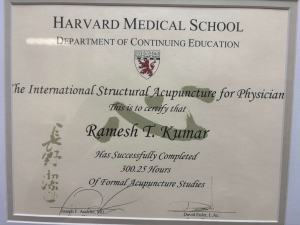
Everything changed when I completed Harvard Medical School’s Medical Acupuncture Program in 2016. Since then, I discovered evidence-based integrative approaches that, when combined with conventional treatment, can dramatically improve outcomes and reduce suffering.
Time Is Critical. Your Treatment Starts Soon
Therefore, book your 72-Hour Treatment Readiness Visit at LifeWell MD today.
Call us at [PHONE NUMBER] or schedule your appointment online at lifewellmd.com/schedule
Located in Port St. Lucie, proudly serving Palm Beach, Martin County, and the entire Treasure Coast region.
This Isn’t Just About Packing a Bag—It’s About Optimizing Your Body
The week before chemotherapy represents a critical window of opportunity. What you do—or don’t do—during this time can influence:
- How well you tolerate treatment
- The severity of side effects you experience
- Your quality of life during and after treatment
- Your body’s ability to recover between cycles
- Your long-term health outcomes
This comprehensive checklist is the foundation of what we call the LifeWell MD Prepare Pathway—our evidence-based protocol for treatment readiness that I’ve refined over decades of clinical practice and advanced training in integrative oncology.
Important: Everything I’m about to share is designed to work alongside your conventional cancer treatment, never as a replacement. At LifeWell MD, we coordinate closely with your primary oncology team to ensure seamless, safe, and effective integrated care.
Your digestive system will face significant stress during chemotherapy. Since the same medications that target rapidly dividing cancer cells also affect the rapidly dividing cells in your gastrointestinal tract, nausea, diarrhea, mouth sores, and appetite changes are among the most common side effects.
Therefore, preparing your gut before treatment begins can make a dramatic difference.
What to Eat: The Pre-Chemotherapy Nutrition Protocol
In the week leading up to your first treatment, focus on nutrient-dense, easily digestible foods that support your body without overwhelming your digestive system.
Recommended Foods
- Bone broth – Rich in amino acids like glutamine that support gut lining integrity
- Soft proteins – Well-cooked fish, eggs, organic poultry
- Cooked vegetables – Steamed or roasted rather than raw (easier to digest)
- Complex carbohydrates – Sweet potatoes, quinoa, rice
- Healthy fats – Avocado, olive oil, wild-caught fatty fish
- Probiotic-rich foods – Plain yogurt, kefir (if approved by your oncologist)
Foods to Minimize or Avoid
- Highly processed foods with artificial additives
- Excessive sugar (can suppress immune function)
- Raw or undercooked foods (infection risk)
- Heavy, greasy, or fried foods
- Alcohol
The Probiotic Question: Protecting Your Gut Barrier
Chemotherapy can devastate your gut microbiome—the trillions of beneficial bacteria that support digestion, immune function, and overall health. Emerging research suggests that starting high-quality probiotics and synbiotic supplements before treatment may help protect your gut barrier and reduce certain side effects.
However, this must be done under medical guidance. Not all probiotics are appropriate during cancer treatment, and timing matters. Some oncologists have concerns about probiotic use during active treatment due to theoretical infection risks in immunocompromised patients.
At LifeWell MD, we carefully review your specific cancer type, treatment protocol, and immune status to determine if and which probiotic formulations are appropriate for you. This is exactly the kind of nuanced, individualized guidance you need—and exactly what’s missing from most conventional oncology practices.
The Oncologist’s Watch List: What Supplements to STOP
Here’s something that might surprise you: many popular supplements that are marketed to cancer patients can actually interfere with how chemotherapy works.
Supplements That Commonly Interfere with Chemotherapy
- High-dose Vitamin C supplements (oral)*
- Vitamin E supplements
- Beta-carotene
- St. John’s Wort
- Some herbal teas and extracts
*Note: IV vitamin C therapy administered by a qualified oncologist is very different from oral supplements and may actually support treatment. See below for details.
The Bottom Line: Do not start, stop, or continue any supplement without explicit approval from a board-certified oncologist who understands both your cancer type and your treatment protocol.
Advanced Hydration Strategy: More Than Just Drinking Water

Proper hydration before chemotherapy helps:
- Protect your kidneys as they filter chemotherapy drugs
- Reduce the risk of urinary tract complications
- Improve drug distribution throughout your body
- Minimize certain side effects like constipation
- Make it easier for nurses to access your veins
The 72-Hour Hydration Protocol
- Calculate your baseline needs: Aim for half your body weight in ounces of water daily (e.g., 150 lbs = 75 oz of water)
- Add electrolytes: Plain water isn’t enough. Include coconut water, bone broth, or electrolyte solutions (avoid high-sugar sports drinks)
- Monitor your urine: It should be pale yellow, not dark or concentrated
- Timing matters: Increase hydration 48-72 hours before treatment, not just the day of
High-Dose Vitamin C IV Therapy: The Evidence-Based Exception
While oral vitamin C supplements can interfere with chemotherapy, intravenous high-dose vitamin C (HDIVC) is an entirely different intervention with a different mechanism of action.
When administered intravenously at the proper doses and timing by a qualified oncologist, vitamin C can achieve blood concentrations 100-500 times higher than oral supplementation. At these concentrations, vitamin C acts as a pro-oxidant rather than an antioxidant, potentially enhancing chemotherapy effectiveness while reducing toxicity to healthy tissues.
What the Evidence Shows
Research published in peer-reviewed journals has shown that HDIVC may:
- Reduce chemotherapy-related fatigue
- Improve quality of life during treatment
- Support immune function
- Reduce inflammation
- Protect against certain toxicities
Crucial distinction: HDIVC must be carefully timed around chemotherapy cycles and is contraindicated with certain cancer types and treatment protocols. This is not something you can do on your own or at a wellness spa—it requires the expertise of a board-certified oncologist.
At LifeWell MD, we’ve safely administered thousands of HDIVC treatments as part of comprehensive integrative cancer care. Learn more about our high-dose IV vitamin C therapy protocol.
Evidence-Based Doesn’t Mean Insurance-Covered
Most of the interventions I’m describing are backed by peer-reviewed research but aren’t covered by insurance—which is why most oncologists never mention them.
At LifeWell MD, we’ve made evidence-based integrative oncology affordable and accessible to patients across the Treasure Coast.
Learn more about the Prepare Pathway
Two of the most debilitating side effects of chemotherapy are also among the most preventable: chemotherapy-induced peripheral neuropathy (nerve damage in hands and feet) and severe nausea. The key is starting protective interventions before these problems develop.
Protecting Your Nerves: The Neuropathy Prevention Protocol
Chemotherapy-induced peripheral neuropathy (CIPN) affects up to 68% of patients receiving neurotoxic chemotherapy agents like platinum compounds, taxanes, and vinca alkaloids. It causes:
- Numbness and tingling in hands and feet
- Difficulty with fine motor tasks (buttoning shirts, writing)
- Balance problems and fall risk
- Chronic pain that can persist for months or years after treatment ends
Unfortunately, once CIPN develops, it’s difficult to reverse. But emerging evidence suggests we can prevent or significantly reduce its severity by supporting nerve health before and during treatment.
L-Glutamine: The Evidence-Based Nerve Protector
L-glutamine is an amino acid that serves as fuel for rapidly dividing cells, including those in your gut lining and nervous system. Clinical studies have shown that glutamine supplementation can:
- Reduce the incidence and severity of peripheral neuropathy
- Protect against oral mucositis (painful mouth sores)
- Support gut barrier function
- Reduce inflammation
For example, a landmark study published in The Journal of Clinical Oncology found that patients receiving high-dose glutamine had significantly less neuropathy compared to placebo, without any interference with chemotherapy effectiveness.
Important: However, dosing, timing, and form of glutamine matter enormously. This isn’t something you should pick up at a health food store and self-prescribe. At LifeWell MD, we use pharmaceutical-grade glutamine at evidence-based doses, carefully coordinated with your chemotherapy schedule.
Mitochondrial Support: Powering Your Cellular Defense
Your mitochondria are the “power plants” of your cells, producing the energy needed for every bodily function. Unfortunately, chemotherapy can damage mitochondria throughout your body, contributing to:
- Severe fatigue (one of the most common complaints)
- Peripheral neuropathy
- Cognitive dysfunction (“chemo brain”)
- Muscle weakness
- Poor recovery between treatment cycles
IV Alpha Lipoic Acid: The Mitochondrial Protector
Alpha lipoic acid (ALA) is a powerful antioxidant that’s unique in its ability to work in both water and fat-soluble environments throughout your body. When administered intravenously, ALA has been shown to:
- Protect mitochondria from chemotherapy-induced damage
- Reduce oxidative stress in nerve cells
- Improve nerve conduction velocity
- Reduce pain and numbness in patients with neuropathy
Moreover, research published in peer-reviewed journals has demonstrated that IV alpha lipoic acid can significantly reduce chemotherapy-induced neuropathy, particularly when started before neurotoxic chemotherapy begins. At LifeWell MD, we’ve developed protocols for IV alpha lipoic acid that are carefully timed to provide maximum protection without interfering with your cancer treatment.
Mistletoe Extract Therapy: Centuries-Old Wisdom Meets Modern Science
Mistletoe extract (Viscum album) is one of the most widely studied complementary cancer therapies in Europe, with over 100 clinical trials examining its effects. While it remains less well-known in the United States, the evidence is compelling.
What Studies Show
- Enhance immune function before treatment begins
- Improve quality of life during chemotherapy
- Reduce fatigue
- Support the body’s natural anti-cancer mechanisms
- Reduce certain side effects of conventional treatment
Typically, mistletoe therapy is started 1-2 weeks before chemotherapy to allow your immune system to respond optimally. It is administered via small subcutaneous injections on a specific schedule.
The Evidence Matters: At LifeWell MD, we only use pharmaceutical-grade, standardized mistletoe preparations that have been studied in clinical trials. Learn more about our mistletoe therapy program
Medical Acupuncture: Ancient Practice, Modern Evidence
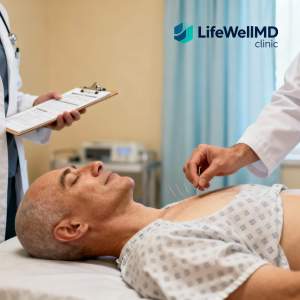
Medical acupuncture isn’t the “alternative medicine” stereotype you might imagine. In fact, it’s a precise, evidence-based intervention with over 30,000 peer-reviewed studies examining its mechanisms and effects. The National Cancer Institute, the National Comprehensive Cancer Network, and the American Society of Clinical Oncology all recognize acupuncture as an effective supportive care intervention for cancer patients.
What the Research Shows
Clinical trials have demonstrated that acupuncture can:
- Reduce chemotherapy-induced nausea and vomiting by up to 67%
- Decrease pain without the need for additional opioid medications
- Improve energy levels and reduce cancer-related fatigue
- Reduce anxiety before and during treatment
- Improve sleep quality
- Support immune function
Therefore, starting acupuncture sessions before chemotherapy begins allows us to address pre-treatment anxiety, optimize your body’s stress response, and establish a foundation for ongoing symptom management.
The Window of Opportunity is Closing
In conclusion, these protective interventions work best when started before your first chemotherapy treatment—not after side effects have already developed.
If your treatment starts in the next 7-10 days, call us immediately:
📞 [PHONE NUMBER]
We offer same-week appointments for cancer patients beginning treatment.
LifeWell MD – Port St. Lucie – Serving Palm Beach & the Treasure Coast
The medical interventions I’ve described are crucial, but they’re only part of preparation. Additionally, the practical, logistical, and emotional aspects of getting ready for chemotherapy are equally important—and too often overlooked.
The Practical Checklist: What to Prepare at Home
Clothing and Comfort Items
- Button-front or zip-up shirts (easy access for ports or IV lines)
- Comfortable, loose-fitting pants with elastic waists
- Layers (infusion centers can be cold; chemo can cause hot flashes)
- Slip-on shoes (neuropathy may make tying laces difficult later)
- Soft blanket for comfort during infusions
Nausea Management Kit (For Home)
- Anti-nausea medications prescribed by your oncologist
- Ginger tea, ginger candies, or ginger capsules
- Peppermint tea or peppermint oil (aromatherapy)
- Small, frequent-eating supplies (crackers, bland snacks)
- Plastic bags (for car rides if nausea strikes)
- Prescription for anti-nausea suppositories (ask your oncologist)
Meal Prep Strategy
Since your energy and appetite will likely be lowest in the 48-72 hours after your first treatment, prepare now:
- Freeze individual portions of easily digestible meals
- Stock your pantry with bland, easy-to-prepare foods
- Enlist help from friends or family for meal delivery
- Research local services like meal delivery for cancer patients
The Communication Protocol: Coordinating Your Care Team
One of the biggest sources of patient anxiety is the fear that their conventional oncologist and integrative providers aren’t communicating—or worse, are working at cross-purposes.
This is where LifeWell MD’s approach is fundamentally different from the “functional medicine” practitioners you may have encountered.
How We Ensure Seamless Coordination
- Oncologist-to-Oncologist Communication: Because I’m a board-certified oncologist, I speak the same language as your primary oncology team. I understand their protocols, their concerns, and their goals.
- Written Documentation: We provide detailed letters to your primary oncology team outlining exactly what integrative interventions you’re receiving, the evidence supporting them, and how they’re timed around your chemotherapy.
- Proactive Coordination: We don’t wait for problems to arise. We establish communication channels with your primary team from day one.
- Transparent Medical Records: Your primary oncologist receives copies of all our treatment notes, lab results, and any changes to your protocol.
This collaborative approach eliminates confusion, reduces medical errors, and ensures that everyone on your care team is working toward the same goal: your survival and quality of life.
You shouldn’t have to be the intermediary between your conventional and integrative care providers. At LifeWell MD, we handle that coordination for you.
Emotional Preparation: You’re Not In This Alone
I’ll never forget my brother-in-law’s last dinner before going into the hospital for the final time. He knew he wasn’t coming home. My family felt helpless, terrified, and completely alone.
That’s why at LifeWell MD, you’re not just a patient—you’re family.
That’s not a marketing slogan. It’s a promise I made 40 years ago, and it’s the reason I show up every single day.
Starting chemotherapy is scary. The uncertainty is overwhelming. But you don’t have to face it unprepared, and you don’t have to face it alone.
After three decades in oncology, I can tell you with absolute certainty: the patients who prepare their bodies, minds, and support systems before treatment begins fare significantly better than those who don’t.
They experience:
- Less severe side effects
- Better treatment tolerance
- Fewer dose reductions or treatment delays
- Higher quality of life
- Better long-term outcomes
But preparation requires expertise. The difference between helpful interventions and dangerous mistakes often comes down to dosing, timing, and understanding drug interactions—knowledge that takes decades of oncology training to develop.
What Makes LifeWell MD Different
You might consider visiting a “functional medicine” practitioner without cancer treatment experience, purchasing supplements based on internet forum advice, or trying to navigate this process on your own.
Or you could work with a board-certified oncologist who:
- Has 30+ years of clinical oncology experience
- Has built six cancer centers and treated over 10,000 cancer patients
- Is Harvard-trained in medical acupuncture
- Has spent nearly a decade specializing in evidence-based integrative oncology
- Works with your primary oncology team, not against them
- Only uses interventions backed by peer-reviewed research
- Coordinates every aspect of your integrative care
- Treats you like family because he remembers what it’s like to feel helpless
The LifeWell MD Prepare Pathway: Your 72-Hour Readiness Program
We’ve taken everything I’ve described in this guide and systematized it into a comprehensive preparation protocol designed specifically for patients beginning chemotherapy or radiation therapy.
The Prepare Pathway Includes
- Comprehensive consultation and treatment plan
- Nutritional optimization guidance
- Supplement review and safety screening
- IV nutrient therapy (if appropriate)
- Medical acupuncture sessions
- Neuropathy prevention protocol
- Coordination with your primary oncology team
- Written documentation for your medical records
- 24/7 access to our clinical team
Learn more about the Prepare Pathway
After Treatment Starts: The Protect and Restore Pathways
Preparation is just the beginning. At LifeWell MD, we support you through every phase of your cancer journey:
- Prepare Pathway: Optimization before treatment begins (what you’ve just read about)
- Protect Pathway: Side-effect management and quality of life support during active treatment
- Restore Pathway: Recovery, survivorship, and long-term wellness after treatment ends
Most oncology practices focus exclusively on killing cancer. We focus on keeping you alive, thriving, and living well—before, during, and after treatment.
Time Is Critical. Your Treatment Starts Soon
If you’re beginning chemotherapy or radiation therapy in the next 1-4 weeks, don’t wait another day.
The protective interventions I’ve described work best when started before treatment—not after side effects have already developed.
Schedule Your 72-Hour Treatment Readiness Visit Today
📞 Call LifeWell MD: 561-210-9999
🌐 Book Online: lifewellmd.com/schedule
📍 Location: Port St. Lucie, Florida
Proudly serving Palm Beach County, Martin County, St. Lucie County, and the entire Treasure Coast region
We Offer
- Same-week appointments for patients beginning treatment
- Telemedicine consultations available
- Coordination with oncology practices throughout South Florida
- Affordable, transparent pricing
Important: We work alongside your conventional cancer treatment, never as a replacement. LifeWell MD’s integrative approaches are designed to complement and enhance the effectiveness of your primary oncology care.
A Personal Note from Dr. Kumar
Forty years ago, I watched my brother-in-law take his last breath. I was powerless to help him. The medical system had failed him—not because the doctors were bad people, but because the system itself was broken.
I vowed that day to become an oncologist and to change the world for cancer patients.
I can’t bring Mr. H back. But I can honor his memory by making sure that you—and every cancer patient who walks through my door—receives the comprehensive, compassionate, evidence-based care he never got.
You’re not a case number. You’re not a statistic. You’re family.
Welcome to LifeWell MD.
With hope and determination,
Dr. Kumar
Board-Certified Radiation Oncologist
Harvard Medical School-Trained in Medical Acupuncture
Founder, LifeWell MD Integrative Oncology
Port St. Lucie, Florida
Additional Resources
Learn More About Our Services
- High-Dose IV Vitamin C Therapy
- Medical Acupuncture for Cancer Patients
- Mistletoe Extract Therapy
- IV Nutritional Therapy
- Protect Pathway: During Treatment Support
- Restore Pathway: Survivorship Care
Read Dr. Kumar’s Story
Why I Became an Integrative Oncologist: The Last Dinner
Medical Disclaimer
The information provided in this document is for educational purposes only and is not intended to replace professional medical advice, diagnosis, or treatment. Always consult with your board-certified oncologist before starting any new interventions, supplements, or treatments. LifeWell MD’s integrative approaches are designed to work alongside conventional cancer treatment, never as a replacement.
About LifeWell MD
LifeWell MD is an integrative oncology practice located in Port St. Lucie, Florida, serving patients throughout Palm Beach County, Martin County, St. Lucie County, and the Treasure Coast region. Led by board-certified oncologist Dr. Kumar, LifeWell MD provides evidence-based integrative cancer care that complements and enhances conventional oncology treatment.
Join the community of patients who have transformed their health and well-being through LifeWell MD’s advanced integrative holistic medical care. Don’t miss your chance to experience personalized, compassionate treatment that truly makes a difference. Call 561-210-9999 today to schedule your consultation — spots are limited. Taking action now could be the key to reclaiming your health and vitality.
Please check out his 120 five star reviews on Healthgrades and his 136 five star reviews at WebMD.. You can also see more LifeWell MD reviews.
Contact: 561-210-9999 | lifewellmd.com
