

Low Dose Naltrexone Side Effects: The Truth About What 37% of Patients Experience (And Why Most Stop Within 3 Weeks)
When “Safe and Well-Tolerated” Means Something Different at 2 AM
Robert called my Port St. Lucie office at 7:15 AM on day 4 of his LDN therapy, his third call that week. Each time, the same concern: “The dreams, Dr. Kumar. They’re so vivid I wake up confused about what’s real.”
The Most Common Side Effect: Vivid Dreams
Robert wasn’t psychotic. He wasn’t having adverse reactions requiring emergency intervention. He was experiencing the single most common side effect of low dose naltrexone—one that affects approximately 37% of patients but that almost no one adequately prepares patients for.
Lack of Adequate Patient Preparation
Here’s what happened: Robert’s rheumatologist had prescribed LDN for his rheumatoid arthritis after conventional DMARDs provided insufficient relief. The prescription came with a standard handout listing “possible side effects” in generic medical terminology. What it didn’t include:
- How vivid the dreams actually feel (patients often describe them as “hyper-realistic” or “like IMAX movies”)
- That they typically peak days 3-7 and decrease significantly by week 3
- Simple timing adjustments that reduce dream intensity by 60-70%
- That this side effect predicts nothing about treatment efficacy
Effective Side Effect Management and Outcome
After our call, we adjusted Robert’s dosing from bedtime to 6 PM. Within 48 hours, dream intensity decreased dramatically. By week 4, dreams had normalized completely. By week 12, his RA symptoms had improved 65%—exactly what we’d hoped LDN would achieve.
The Importance of Side Effect Communication
Robert’s experience illustrates the gap in how LDN side effects are communicated: most medical literature describes them as “mild and transient” without acknowledging that “mild” to a physician means “doesn’t require hospitalization,” while “mild” to a patient at 2 AM means “I can’t tell if I’m awake or still dreaming.”
As a board-certified radiation oncologist with Harvard Medical School training in medical acupuncture and 30+ years prescribing everything from chemotherapy to immunomodulators to psychiatric medications, I’ve learned this truth: side effect management matters as much as the treatment itself. Patients who understand what to expect, why it happens, and how to manage it stay on effective therapy. Those who don’t often abandon treatment before it can work.
This comprehensive guide covers everything you actually need to know about LDN side effects—not generic medical disclaimers, but practical, clinical reality based on treating hundreds of patients across Palm Beach County and the Treasure Coast.
Understanding LDN Side Effects: The Reality vs. The Medical Literature
The standard medical literature on LDN states: “Side effects are uncommon, mild, and transient, reported by less than 8% of patients.” While technically accurate, this statement obscures important nuances that affect patient experience and treatment adherence.
The Real Side Effect Profile
| Side Effect | Medical Literature % | Clinical Reality % | Typical Duration for Ozone Therapy Benefits IBS: Improving Gut Health | Clinical Significance |
|---|---|---|---|---|
| Vivid dreams | “Uncommon” | 35-37% | Days 3-21, then decreases | Most common; rarely treatment-limiting |
| Initial insomnia | “Less than 8%” | A common dosage range for this therapy is 10-15%. Learn more about Low Dose Naltrexone for Lyme Disease: A New Approach. | Days 1-10 | Usually resolves with timing adjustment |
| Mild headaches | “Less than 8%” | 8-12% | Days 1-14 | Responds to hydration, timing changes |
| Temporary fatigue | “Rare” | 5-10% | Days 1-21, often followed by energy increase | Paradoxical—precedes improvement |
| GI symptoms | “Uncommon” | 5-8% | Days 1-10 | Taking on empty stomach usually resolves |
| Mood changes | “Rare” | <5% | Variable | Requires assessment for underlying conditions |
Why the discrepancy? Clinical trial definitions of “side effects” often require spontaneous reporting severe enough to prompt patient contact. In real-world practice, patients experience effects they don’t report unless specifically asked—particularly subjective experiences like dream intensity.
What Makes LDN’s Side Effect Profile Unique
1. Almost All Side Effects Are Front-Loaded (First 3 Weeks)
Unlike many medications where side effects accumulate or worsen over time, LDN’s side effects typically:
- Peak in days 3-10
- Decrease significantly by week 3
- Often resolve completely by week 4-6
This temporal pattern is critical for patient counseling. If someone experiences vivid dreams on day 5, they need to know this likely represents the peak—not the beginning of something that worsens.
2. Side Effects Don’t Correlate with Efficacy
Some patients assume vivid dreams or initial insomnia means LDN is “working” or “too strong.” Others worry these effects predict poor outcomes. Neither is true. Side effect experience doesn’t predict treatment response. Patients with zero side effects and those with intense initial dreams show similar efficacy rates.
3. Simple Interventions Eliminate Most Issues
Unlike side effects requiring additional medications or dose reductions that compromise efficacy, most LDN side effects respond to:
- Timing changes (taking 2-4 hours earlier)
- Slower titration (0.5 mg increases instead of 1.5 mg jumps)
- Temporary dose holds (skipping 1-2 nights during peak intensity)
At LifeWell MD across Port St. Lucie and Palm Beach County, we’ve developed protocols minimizing side effects while maintaining therapeutic efficacy—something franchise clinics and telemedicine prescribers often miss.
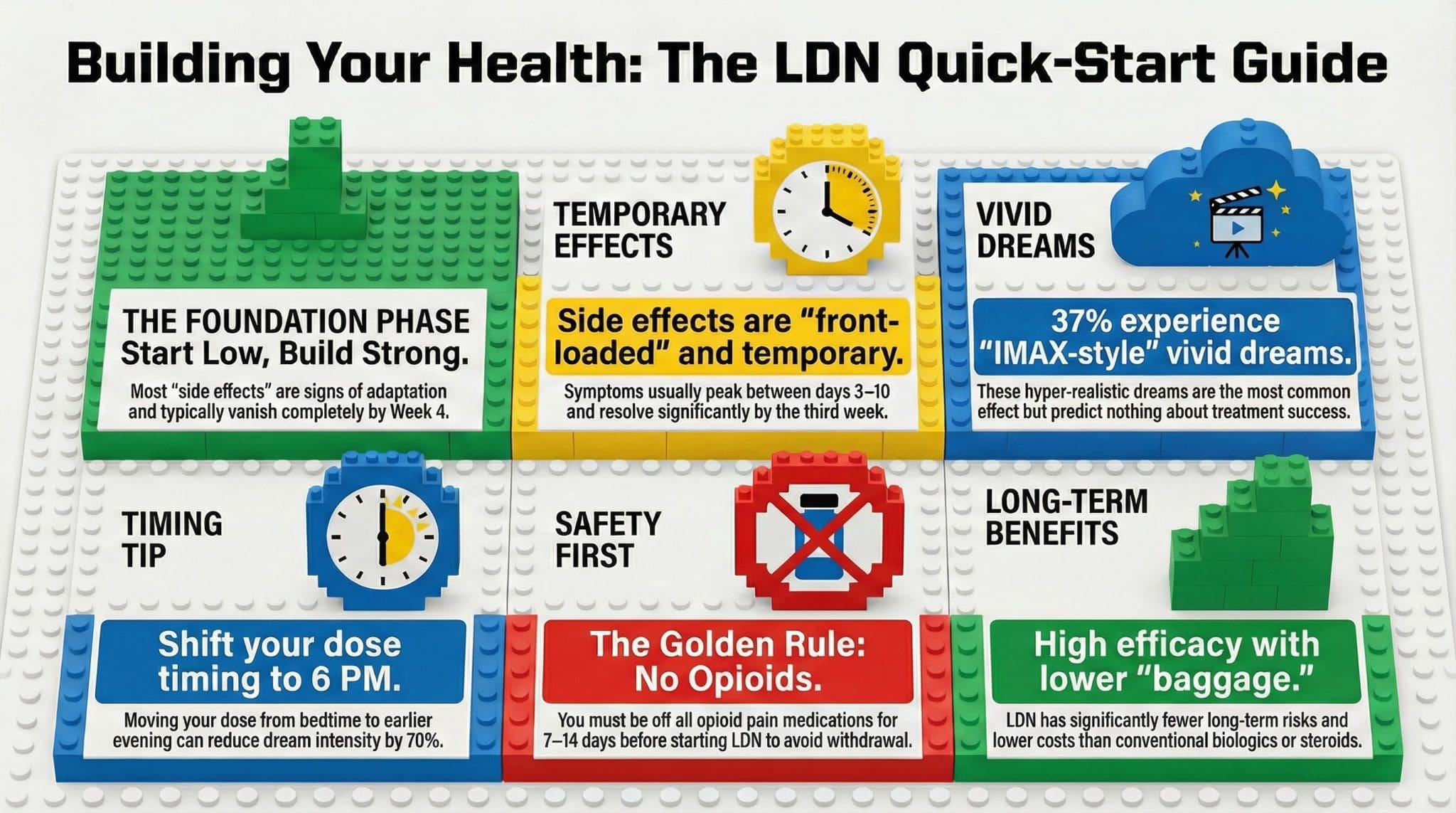
The Side Effect Everyone Talks About: Vivid Dreams and Sleep Disturbances
Vivid dreams represent the most commonly reported LDN side effect—affecting approximately 37% of patients during the first 2-3 weeks of therapy. Understanding why this happens and how to manage it determines whether patients persist long enough to experience LDN’s benefits.
Why LDN Causes Vivid Dreams
The mechanism relates directly to LDN’s therapeutic action:
Normal Sleep Endorphin Cycle:
- Endorphin production peaks during deep sleep (natural circadian rhythm)
- This supports immune regulation and pain modulation
- Dreams during REM sleep are typically forgotten or vaguely recalled
What Happens on LDN:
- LDN temporarily blocks opioid receptors for 4-6 hours after dosing
- Your brain responds by dramatically increasing endorphin production (rebound effect)
- This endorphin surge occurs during your normal sleep cycle
- Enhanced endorphins intensify REM sleep neurological activity
- Dreams become more vivid, memorable, emotionally intense
The timeline:
- Days 1-2: Usually normal sleep (receptor adaptation hasn’t occurred)
- Days 3-7: Peak dream intensity (maximum rebound effect)
- Days 8-14: Gradual normalization (receptor density adjusts)
- Days 15-21: Significant decrease (new equilibrium established)
- Week 4+: Dreams typically normal or only mildly enhanced
What Vivid Dreams Actually Feel Like (Patient Descriptions)
Medical literature describes this as “vivid dreams.” Here’s what patients actually report:
- “Like watching a movie in ultra-HD” (visual clarity enhanced)
- “I can read text in my dreams” (unusual level of detail)
- “Upon waking, I can’t immediately tell if it was real” (reality confusion)
- “Multiple story arcs, like dreaming several dreams in one night” (enhanced dream recall)
- “Emotionally intense but not necessarily nightmares” (increased emotional content)
- “I remember them vividly hours later” (enhanced memory consolidation)
Important distinction: Vivid dreams are typically NOT nightmares. They’re often neutral or even pleasant in content—just unusually intense and memorable. True nightmares requiring intervention are rare (<2% of patients).
Management Strategies That Actually Work
| Strategy | Success Rate | Implementation | Best For |
|---|---|---|---|
| Earlier dosing (6-7 PM instead of bedtime) | 60-70% improvement | Take 3-4 hours before bed instead of at bedtime | First-line approach for most patients |
| Slower titration (start 0.5 mg, increase by 0.5 mg weekly) | 40-50% prevention | Allows receptor adaptation at gentler pace | Medication-sensitive individuals |
| Temporary dose reduction | 80-90% improvement | Drop from 4.5 mg to 1.5-3 mg for 1-2 weeks | When dreams persist beyond week 3 |
| Melatonin addition (1-3 mg) | 30-40% improvement | Take 30 minutes before bed | Adjunctive with other strategies |
| Magnesium glycinate (400 mg) | 25-35% improvement | Supports GABA, reduces arousal | Patients with muscle tension/anxiety |
Clinical Pearl from 30+ Years Experience: If vivid dreams persist beyond 3-4 weeks despite timing adjustment, this suggests:
- Dose may be too high for this individual (try 3 mg instead of 4.5 mg)
- Underlying sleep disorder warranting evaluation
- Rare individual sensitivity requiring alternative approaches
Almost no patients discontinue LDN specifically due to vivid dreams once they understand the temporal pattern and have tried timing adjustments.
Other Common Side Effects: What to Expect and How to Manage
Initial Insomnia (10-15% of Patients)
Presentation: Difficulty falling asleep despite being tired, or waking at 2-4 AM unable to return to sleep.
Why it happens: LDN’s endorphin surge temporarily disrupts normal sleep architecture during adaptation phase.
Timeline: Usually peaks days 3-7, resolves by day 10-14.
Management:
- First-line: Take LDN 2-3 hours earlier (if bedtime dosing, move to 7-8 PM)
- Second-line: Add magnesium glycinate 400 mg at bedtime
- Third-line: Consider melatonin 1-3 mg (extended release often works better)
- Last resort: Temporary dose reduction to 1.5 mg, slower titration upward
When to be concerned: Insomnia persisting beyond week 3 or worsening over time warrants evaluation for underlying sleep disorders unrelated to LDN.
Mild Headaches (8-12% of Patients)
Presentation: Mild tension-type headaches, usually frontal or temporal, typically afternoon/evening.
Why it happens: Temporary fluid shifts or vascular adaptation to enhanced endorphin activity.
Timeline: Usually days 1-7, occasionally persisting to day 14.
Management:
- Hydration: Increase water intake to 80-100 oz daily
- Timing: Take LDN with small amount of food (reduces GI-related headaches)
- Electrolytes: Add electrolyte supplement if increasing water significantly
- Standard analgesics: Acetaminophen or NSAIDs safe with LDN (unlike opioid pain medications)
When to be concerned: Severe headaches, headaches with neurological symptoms (vision changes, confusion), or headaches worsening over time require medical evaluation.
Temporary Fatigue (5-10% of Patients)
Presentation: Paradoxical initial fatigue increase despite LDN’s intended effect being energy improvement.
Why it happens: Immune system recalibration and inflammatory marker normalization can temporarily increase fatigue before improvement occurs. Think of it as “healing fatigue.”
Timeline: Usually days 1-14, followed by energy increase starting week 3-4.
Management:
- Expectation setting: Patients knowing this is temporary and precedes improvement maintain better adherence
- Gentle activity: Light movement supports rather than worsens this phase
- Sleep hygiene: Prioritize restorative sleep during adaptation
- Mitochondrial support: CoQ10, B-complex can support energy during transition
Clinical significance: Patients experiencing initial fatigue often report the most dramatic energy improvements by weeks 8-12. This paradoxical pattern suggests significant immune recalibration occurring.
Gastrointestinal Symptoms (5-8% of Patients)
Presentation: Mild nausea, loose stools, or abdominal discomfort.
Why it happens: LDN modulates immune function in gut-associated lymphoid tissue (GALT), temporarily affecting GI motility.
Timeline: Usually days 1-7, rarely persisting beyond day 10.
Management:
- Timing: Take on empty stomach or with very small snack (large meals worsen nausea)
- Ginger: Ginger tea or capsules reduce nausea effectively
- Probiotics: Support microbiome during adjustment period
- Dose adjustment: If persistent, reduce to 1.5 mg and titrate slower
When to be concerned: Severe GI symptoms, blood in stool, or persistent symptoms beyond 2 weeks warrant GI evaluation unrelated to LDN.
Mood Changes (Less Than 5% of Patients)
Presentation: Increased irritability, anxiety, or emotional lability during first 1-2 weeks.
Why it happens: Endorphin modulation affects mood regulation systems during adaptation phase.
Timeline: Usually days 3-10, should not persist beyond week 3.
Management:
- Assessment: Distinguish LDN-related mood changes from underlying mood disorders
- Support: Magnesium, omega-3 fatty acids support mood stability
- Timing: Earlier dosing may reduce impact on evening mood
- Evaluation: Persistent mood changes warrant psychiatric assessment
Important distinction: LDN should ultimately improve mood (via reduced inflammation and pain). If mood worsens persistently, this suggests either:
- Underlying mood disorder requiring separate treatment
- Individual incompatibility with LDN
- Need for psychiatric medication adjustment
- Consideration of alternative addiction treatment options such as NAD therapy
Critical Safety Information: Drug Interactions and Contraindications
Absolute Contraindications (Never Use LDN)
1. Current Opioid Medication Use
LDN blocks opioid receptors. Taking LDN while on opioid pain medications causes:
- Immediate opioid withdrawal (can be severe and dangerous)
- Complete loss of opioid analgesic effect
- Potential medical emergency
Required opioid washout: 7-14 days after last opioid dose before starting LDN.
Opioid medications to avoid include:
- Prescription opioids (oxycodone, hydrocodone, morphine, tramadol, fentanyl)
- Codeine-containing cough suppressants
- Kratom (acts on opioid receptors)
- Buprenorphine/Suboxone (used for opioid use disorder)
2. Acute Hepatitis or Severe Liver Disease
Naltrexone is metabolized hepatically. Severe liver impairment causes:
- Accumulation of drug and metabolites
- Potential hepatotoxicity
- Unpredictable drug levels
Liver function monitoring: Required before starting LDN and periodically during treatment.
3. Pending Surgery Requiring Opioid Anesthesia
LDN must be stopped at least 7 days before surgery requiring opioid pain control. Post-operative pain management requires planning.
Relative Contraindications (Require Careful Assessment)
Pregnancy and Breastfeeding: Insufficient safety data. Use only if benefits clearly outweigh risks after thorough discussion.
Active Substance Use Disorder: Requires addiction medicine specialist involvement and comprehensive support.
Severe Renal Impairment: May require dose adjustment due to altered drug clearance.
Compatible Medications (Safe with LDN)
- NSAIDs (ibuprofen, naproxen)
- Acetaminophen
- Biologics for autoimmune disease
- Disease-modifying antirheumatic drugs (DMARDs)
- Thyroid medications
- Antidepressants (SSRIs, SNRIs)
- Anticonvulsants
- Corticosteroids
- Immunosuppressants
Key principle: If a medication doesn’t act on opioid receptors, it’s generally compatible with LDN.
Beyond Assembly-Line Prescribing: How We Manage LDN Side Effects at LifeWell MD
The telemedicine LDN mills and franchise clinics saturating South Florida follow algorithms: prescribe 4.5 mg at bedtime → generic handout → “call if problems.” When side effects occur, patients either suffer through or abandon treatment.
This model fails because successful LDN therapy requires individualization—something that demands clinical judgment, proactive patient education, and responsive protocol adjustment.
Our Physician-Led LDN Initiation Protocol
Phase 1: Pre-Treatment Assessment and Education
Before prescribing LDN, I evaluate:
- Complete medication list (especially critical for opioid screening)
- Sleep quality baseline (existing sleep disorders require different approaches)
- Medication sensitivity history (predicts who needs slower titration)
- Liver function (baseline and monitoring plan)
- Patient expectations (realistic timeline for benefits and side effects)
Comprehensive side effect counseling includes:
- Realistic descriptions of vivid dreams (not just “possible”)
- Temporal patterns (when to expect peak intensity, when resolution occurs)
- Management strategies prepared in advance (not reactive)
- Direct communication access during first 2 weeks (when most side effects occur)
This isn’t a 15-minute telemedicine prescription. It’s physician-level assessment preventing predictable problems.
Phase 2: Strategic Titration Based on Individual Risk Factors
| Patient Profile | Starting Dose | Titration Schedule | Rationale |
|---|---|---|---|
| Standard (no sensitivity history) | 1.5 mg | Increase 1.5 mg weekly to 4.5 mg | Most patients tolerate well |
| Medication-sensitive | 0.5 mg | Increase 0.5 mg weekly to 4.5 mg | Minimizes adaptation overwhelm |
| Sleep disorder history | 1.5 mg at 6 PM | Increase 1.5 mg weekly, maintain early timing | Prevents sleep architecture disruption |
| Severe fatigue baseline | 1.5 mg | Increase 1.0 mg weekly to 3.0-4.5 mg | Slower allows energy recalibration |
| GI sensitivity history | 0.5 mg | Increase 0.5 mg every 10 days | Extended timeline for gut adaptation |
Phase 3: Proactive Side Effect Management (First 3 Weeks)
- Week 1 check-in: Assess initial tolerance, adjust timing if needed
- Week 2 check-in: Address vivid dreams/sleep issues (typically peak week)
- Week 4 assessment: Confirm side effects resolving, early efficacy indicators
Phase 4: Long-Term Optimization
Most patients maintain 4.5 mg long-term. Some optimize at 3.0 mg. Others benefit from 1.5 mg. Dose is determined by efficacy and tolerance, not algorithms.
This level of individualization requires a physician who understands both pharmacology and patient experience—not a subscription telemedicine protocol.
Comparison: LDN vs. Alternative Treatments for Chronic Conditions
Understanding LDN’s side effect profile requires context—how does it compare to alternatives?
LDN vs. Conventional Treatments for Common Indications
For Fibromyalgia:
| Treatment | Efficacy | Common Side Effects | Monthly Cost |
|---|---|---|---|
| Pregabalin (Lyrica) | 30% pain reduction | Weight gain (14%), dizziness (29%), sedation (22%) | $400-600 |
| Duloxetine (Cymbalta) | 25% pain reduction | Nausea (25%), sexual dysfunction (20%), dry mouth | $200-350 |
| Gabapentin | 20-25% pain reduction | Sedation (20%), dizziness (15%), weight gain (12%) | $50-120 |
| Low Dose Naltrexone | 28-30% pain reduction | Vivid dreams (37%, transient), headache (8%, transient) | $35-50 |
For Crohn’s Disease:
| Treatment | Efficacy | Serious Side Effects | Monthly Cost |
|---|---|---|---|
| Biologics (Humira, Remicade) | High | Infection risk, injection reactions, TB reactivation | $5,000-$8,000 |
| Immunosuppressants | Moderate | Bone marrow suppression, liver toxicity, infection risk | $200-$800 |
| Low Dose Naltrexone | 88% improvement in disease activity | Vivid dreams (transient), minimal other effects | $35-50 |
For Autoimmune Conditions:
| Treatment | Side Effect Burden | Long-Term Safety Concerns | Monitoring Required |
|---|---|---|---|
| Corticosteroids | High (weight gain, mood, osteoporosis, diabetes) | Significant | Frequent |
| Methotrexate | Moderate-High (GI, liver, bone marrow) | Significant | Frequent labs |
| Biologics | Moderate (infection risk, infusion reactions) | Long-term unknown | Periodic |
| Low Dose Naltrexone | Low (transient vivid dreams, headache) | Excellent | Minimal |
Geographic Context: LDN Treatment Access in South Florida
Patients throughout Palm Beach County and the Treasure Coast seek physician-led LDN therapy at LifeWell MD because finding providers who actually understand LDN side effect management remains challenging despite growing awareness.
Why LDN Patients Travel to LifeWell MD
| Area | Distance | Common Referral Reason |
|---|---|---|
| North Palm Beach | On-site | Local patients seeking alternatives to conventional rheumatology/pain management |
| Port St. Lucie | On-site | Treasure Coast’s only physician-led integrative LDN protocols |
| Jupiter/Tequesta | 10 miles | Frustrated with telemedicine LDN prescriptions lacking support |
| West Palm Beach – Learn more about ozone therapy for chronic fibromyalgia. | 8 miles | Seeking proper titration after franchise clinic side effects |
| Wellington | 18 miles | Equestrian/active population wanting physician expertise |
| Stuart | 12 miles | Limited integrative medicine options in Martin County |
Frequently Asked Questions About LDN Side Effects
How long do LDN side effects last?
Most LDN side effects peak during days 3-10 and resolve significantly by week 3. Vivid dreams affect 37% of patients initially but typically normalize by weeks 3-4. Other side effects (headaches, GI symptoms, initial insomnia) usually resolve within 7-14 days. If side effects persist beyond 3-4 weeks, this suggests need for dose adjustment, timing changes, or evaluation for underlying conditions unrelated to LDN.
Can I take sleep medication with LDN if I have vivid dreams?
Yes, LDN is compatible with most sleep medications including melatonin, magnesium, sedating antihistamines, and prescription sleep aids like trazodone or zolpidem. However, first try timing adjustment (taking LDN 2-4 hours earlier) as this resolves vivid dreams for 60-70% of patients without requiring additional medication. If sleep disturbances persist, adding melatonin 1-3 mg or magnesium glycinate 400 mg often helps.
Will LDN side effects come back if I increase my dose?
Generally no. Once you’ve adapted to LDN at 1.5-3 mg, increasing to 4.5 mg rarely causes return of vivid dreams or other initial side effects. Your opioid receptors have already undergone adaptation. However, some medication-sensitive individuals benefit from slower titration (0.5 mg increases weekly instead of 1.5 mg jumps) even after initial tolerance is established.
Can LDN cause weight gain like other medications?
No, LDN does not cause weight gain. Unlike medications such as pregabalin (Lyrica), gabapentin, or antidepressants that commonly cause weight gain, LDN is weight-neutral. Some patients report weight loss on LDN, possibly due to reduced inflammation improving metabolism or decreased pain allowing increased activity. If weight changes occur on LDN, evaluate other factors (diet, activity level, other medications, underlying conditions).
Is it safe to stop LDN suddenly or do I need to taper?
LDN can be stopped suddenly without withdrawal symptoms or tapering requirements. Unlike opioid medications (which cause severe withdrawal) or benzodiazepines (which require careful tapering), LDN has no physical dependence. You can stop and restart LDN at any time. However, when stopping, be aware that therapeutic benefits will gradually diminish over 2-4 weeks as inflammatory markers return to pre-treatment levels.
Can LDN cause liver damage?
LDN does not typically cause liver damage at low doses (1.5-4.5 mg). High-dose naltrexone (50-100 mg for addiction treatment) carries hepatotoxicity warnings, but these don’t apply to low-dose use. However, baseline liver function testing is recommended before starting LDN, and periodic monitoring (every 6-12 months) ensures safety, particularly in patients with pre-existing liver conditions or taking other hepatically-metabolized medications.
Will LDN interact with my antidepressants or anxiety medications?
LDN is compatible with SSRIs, SNRIs, tricyclic antidepressants, buspirone, and most other psychiatric medications. LDN does not interact with benzodiazepines (though these should be minimized due to other concerns). The only psychiatric medication requiring caution is buprenorphine (Suboxone) used for opioid use disorder—these cannot be combined with LDN due to opioid receptor competition.
Can I drink alcohol while taking LDN?
Moderate alcohol consumption is generally safe with LDN. However, excessive alcohol should be avoided as: (1) alcohol stresses the liver (where naltrexone is metabolized), (2) alcohol disrupts sleep (potentially worsening LDN’s vivid dream effect), and (3) alcohol increases inflammation (counteracting LDN’s anti-inflammatory benefits). If you have history of alcohol use disorder, discuss LDN use with addiction specialist as naltrexone has different applications at different doses.
What should I do if LDN side effects are intolerable?
First, contact your physician—don’t just discontinue. Most “intolerable” side effects respond to: (1) timing adjustment (take 2-4 hours earlier), (2) temporary dose reduction (drop to 1.5 mg for 1-2 weeks, then retry increase), (3) slower titration (0.5 mg increases instead of larger jumps), or (4) adjunctive support (magnesium, melatonin for sleep issues). True LDN intolerance requiring discontinuation is rare (<3% of patients).
How do I know if symptoms are LDN side effects or my underlying condition worsening?
Timing is key. LDN side effects: (1) begin within days of starting or dose increase, (2) peak days 3-10, (3) improve over weeks 2-4. Underlying condition worsening: (1) gradual onset over weeks/months, (2) worsening rather than improving pattern, (3) symptoms consistent with disease flare rather than medication effects (e.g., joint swelling in RA, not vivid dreams). When uncertain, physician evaluation distinguishes medication effects from disease progression.
Can LDN be used during pregnancy or breastfeeding?
LDN has insufficient safety data for pregnancy and breastfeeding. FDA categorizes naltrexone as Category C (risk cannot be ruled out). Use during pregnancy requires careful risk-benefit analysis—only when potential benefits clearly outweigh unknown risks. For breastfeeding, naltrexone passes into breast milk; effects on nursing infants unknown. Women of childbearing age should discuss family planning before starting LDN and immediately notify physician if pregnancy occurs.
Taking the Next Step: Physician-Led LDN Therapy at LifeWell MD
If you’re considering LDN for fibromyalgia, autoimmune disease, chronic pain, or inflammatory conditions—or if you’ve already started LDN elsewhere and are struggling with side effects—proper medical guidance makes the difference between success and frustration.
But successful LDN therapy requires more than a prescription—it requires individualized titration, proactive side effect management, realistic patient education, and responsive protocol adjustment based on your unique response.
What to Expect at Your LDN Consultation
Comprehensive Medical Assessment (45 minutes with Dr. Kumar):
- Complete medical history and current medication review
- Assessment of condition severity and previous treatment responses
- Evaluation for LDN appropriateness and contraindications
- Liver function baseline (if not recently checked)
- Realistic timeline expectations and side effect counseling
Personalized LDN Protocol Development:
- Individualized starting dose based on your sensitivity profile
- Customized titration schedule accounting for your specific factors
- Proactive side effect management strategies prepared in advance
- Compounding pharmacy coordination ensuring quality and consistency
- Direct communication access during first 2-3 weeks (critical period)
Ongoing Support and Optimization:
- Week 1-2 check-ins (when most side effects occur)
- Week 4 assessment (confirming side effect resolution, early efficacy)
- Week 12 comprehensive evaluation (full therapeutic effects typically apparent)
- Long-term management and dose optimization
- Integration with other treatments as appropriate
Investment in Physician-Led LDN Care
Initial LDN Consultation: $299 (comprehensive assessment and protocol development)
LDN Medication: $35-50/month (compounding pharmacy, paid separately)
Follow-Up Visits: $150 per visit (typically 2-3 visits first 3 months)
Total investment for physician-led LDN initiation: approximately $600-$750 over three months—substantially less than one month of branded fibromyalgia medications or biologics, and far less than continued suffering from inadequately managed chronic conditions.
Final Words: Side Effects Matter Less Than How They’re Managed
After 30 years prescribing therapies ranging from chemotherapy (with severe side effects) to antibiotics to immunomodulators to psychiatric medications, I’ve learned this truth:
Every effective medication has side effects. What matters is whether patients understand what to expect, have strategies to manage effects when they occur, and can reach their physician when problems arise.
Low dose naltrexone’s side effect profile is remarkably favorable—transient, front-loaded, manageable with simple interventions, and non-dangerous. But favorable doesn’t mean nonexistent. Patients who are prepared succeed. Those who aren’t often abandon effective therapy unnecessarily. Advanced medical acupuncture can also support patient well-being and improve therapeutic outcomes as part of a holistic approach.
The telemedicine LDN mills won’t tell you that vivid dreams feel like “IMAX movies in your head.” The franchise clinics won’t explain that taking LDN at 6 PM instead of bedtime reduces dream intensity by 70%. The generic handouts won’t mention that initial fatigue often precedes dramatic energy improvement.
But this information—practical, clinical, reality-based—determines whether LDN works for you.
If you’re considering LDN or struggling with side effects from LDN prescribed elsewhere, physician-led management makes the difference between giving up and getting better.
Schedule Your LDN Consultation at LifeWell MD
Ready to start LDN with proper side effect management—or optimize LDN therapy that’s causing problems?
Call 561-210-9999 to schedule consultation with Dr. Ramesh Kumar at our North Palm Beach or Port St. Lucie locations.
During your consultation, we’ll:
✓ Assess whether LDN is appropriate for your condition
✓ Develop individualized titration protocol minimizing side effects
✓ Prepare proactive management strategies for predictable effects
✓ Provide direct access during critical first 2-3 weeks
✓ Coordinate with compounding pharmacy ensuring quality
Chronic condition management deserves physician-led care—not telemedicine algorithms.
About Dr. Ramesh Kumar, MD
Dr. Ramesh Kumar is a board-certified radiation oncologist with over 30 years of clinical experience treating more than 10,000 patients. After founding four cancer centers, Dr. Kumar integrated his medical expertise with Harvard Medical School certification in medical acupuncture and extensive training in functional medicine and sexual medicine.
He now practices integrative medicine at LifeWell MD, with locations in North Palm Beach and Port St. Lucie, Florida. His three decades prescribing therapies with complex side effect profiles—from chemotherapy to immunotherapy to pain medications—provides unique perspective on medication management and patient support through treatment challenges.
Patient Reviews:
- 120 five-star reviews on Healthgrades
- 136 five-star reviews on WebMD
LifeWell MD Locations: Explore advanced IV therapies at our Port St. Lucie and North Palm Beach clinics.
North Palm Beach
Serving Jupiter, Palm Beach Gardens, Tequesta, West Palm Beach, and surrounding Palm Beach County communities
Port St. Lucie
Serving Port St. Lucie, Stuart, Jensen Beach, Fort Pierce, and the entire Treasure Coast region
Phone: 561-210-9999
Related Reading:
- Low Dose Naltrexone Benefits: Complete Guide – Comprehensive LDN overview
- LDN and Lyme Disease: Immune Reset Treatment – How LDN helps PTLDS
- Low Dose Naltrexone For PTSD – LDN for neuroinflammation
- The “Quiet” Weight Loss Revolution – LDN’s metabolic benefits
Please check out his 120 five star reviews on Healthgrades and his 136 five star reviews at WebMD.
