

Low Dose Naltrexone (LDN): The $40 Solution That Calmed My Patient’s 12-Year Autoimmune Storm
When 57% Success Beats the System (But Nobody’s Selling It)
Sarah walked into my North Palm Beach office in 2019 carrying a three-inch binder documenting her 12-year odyssey through autoimmune hell. Hashimoto’s thyroiditis. Fibromyalgia. Suspected Sjögren’s syndrome. She’d seen 14 specialists across Palm Beach County, tried 23 different medications (most abandoned due to side effects), and spent over $47,000 out of pocket for minimal relief.
Then I prescribed something that cost $40 per month and had been studied since the 1980s: low dose naltrexone (LDN), an option sometimes used for chronic pain.
Within 10 weeks, her pain scores dropped 60%. Her brain fog lifted. Her thyroid antibodies fell by half. She returned to morning walks along Singer Island—something she hadn’t done in four years.
As a Harvard-trained radiation oncologist who spent 30 years treating over 10,000 cancer patients before transitioning to integrative medicine, I’ve learned this truth: the most powerful interventions aren’t always the most marketed. Sometimes they’re supported by solid research but ignored because there’s no pharmaceutical profit motive.
Low dose naltrexone is one of those interventions.
What Is Low Dose Naltrexone (And Why Your Doctor Hasn’t Mentioned It)
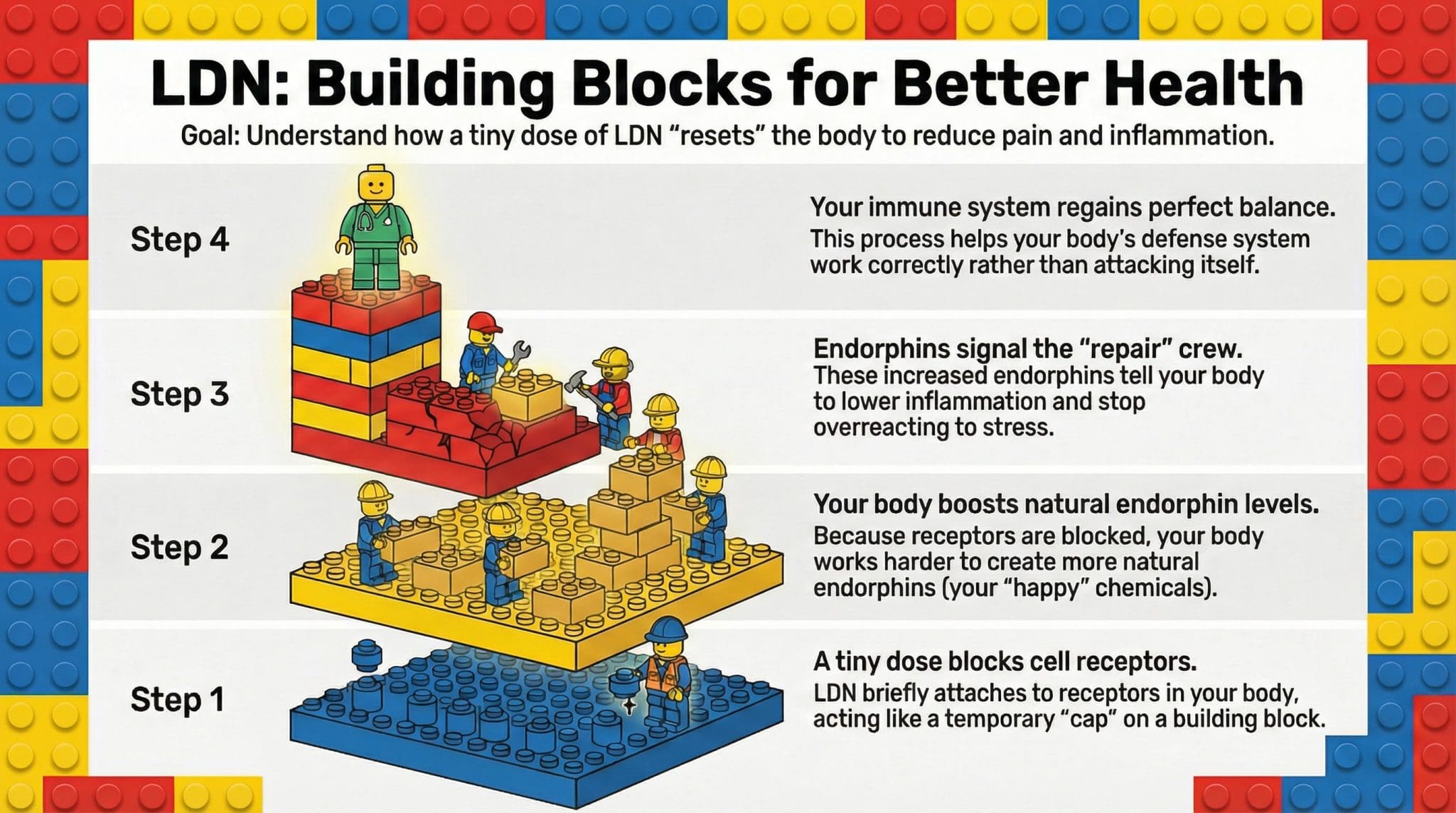
Low dose naltrexone (LDN) refers to off-label use of naltrexone at 1-4.5 mg daily—about 10% of the 50-100 mg dose the FDA approved in 1984 for opioid addiction treatment. At high doses, naltrexone blocks opioid receptors to prevent addiction. At low doses, it temporarily blocks those receptors, triggering a rebound effect that floods your system with natural endorphins and dramatically reduces inflammation.
The paradox: an opioid blocker becomes a pain reliever.
The Research That Changed Everything
| Study Population | Results | Clinical Significance |
|---|---|---|
| Fibromyalgia patients (Stanford, 2013) | 57% achieved ≥33% pain reduction vs. 11% placebo | Most robust chronic pain evidence |
| Crohn’s disease patients (Penn State, 2007) | 88% improved disease activity; 78% showed endoscopic healing | Actual intestinal healing, not just symptoms |
| Hashimoto’s thyroiditis (Multiple observational studies) | 20-50% reduction in thyroid antibodies within 6 months | Slows autoimmune destruction |
| Multiple sclerosis (Case series) | Reduced fatigue, improved quality of life scores | Benefits beyond traditional MS therapies |
Why hasn’t your doctor mentioned it? No commercial formulation exists. Since naltrexone went generic decades ago, no pharmaceutical company profits from promoting its off-label use at 10% dosing. It requires compounding pharmacies—a barrier that keeps LDN outside mainstream awareness despite compelling evidence.
At LifeWell MD across Port St. Lucie and the Treasure Coast, we prescribe what works, regardless of profit margins.
How LDN Actually Works: The Dual Mechanism
LDN’s effectiveness comes from two complementary pathways working simultaneously:
Pathway 1: The Endorphin Rebound
When you take 4.5 mg LDN at bedtime, it temporarily blocks opioid receptors for 4-6 hours. Your body responds by:
- Increasing endorphin production (natural pain relievers)
- Upregulating opioid receptor density (enhanced sensitivity)
- Boosting enkephalin release (another natural opioid class)
By morning, naltrexone has cleared, but enhanced endorphin production persists all day. You’ve tricked your body into becoming a better pain-fighting machine.
Pathway 2: Microglial Cell Modulation
At low doses, naltrexone antagonizes Toll-like receptor 4 (TLR4) on microglial cells—your central nervous system’s immune cells. Blocking TLR4 stops release of inflammatory cytokines:
- Tumor necrosis factor-alpha (TNF-α)
- Interleukin-6 (IL-6)
- Nitric oxide
This interrupts the inflammatory cascade perpetuating chronic pain and autoimmune disease.
Why This Mechanism Matters
| Traditional Pain Medications | Low Dose Naltrexone |
|---|---|
| Suppress symptoms temporarily | Enhances natural pain-fighting systems |
| Often lose effectiveness over time | Maintains long-term efficacy |
| Significant side effects common | <8% report any adverse effects |
| Risk of dependency (opioids) | Zero addiction potential |
| High cost ($200-$800/month) | Low cost (~$40/month) |
This isn’t symptom suppression—it’s physiological optimization. That distinction matters for long-term outcomes.
The Conditions Where LDN Delivers Results
After integrating LDN into practice at LifeWell MD over five years, I’ve observed meaningful improvement across a remarkably broad spectrum of chronic conditions.
Fibromyalgia: The Strongest Evidence
Stanford’s double-blind, placebo-controlled studies revealed:
- 28-30% reduction in pain scores vs. placebo
- 57% achieved ≥33% pain reduction (clinically significant)
- 50% rated themselves “much improved” on quality of life measures
Patients with higher erythrocyte sedimentation rates (ESR)—indicating more inflammation—respond best.
Clinical Pearl from 30+ Years: Fibromyalgia patients who’ve failed gabapentin, duloxetine, and pregabalin often respond to LDN because the mechanism is fundamentally different.
Inflammatory Bowel Disease: Where LDN Shines
Penn State’s research on Crohn’s disease produced astonishing results:
- 88% of patients improved on Crohn’s Disease Activity Index
- 78% showed endoscopic improvement—actual intestinal healing, not just symptom relief
- 67% achieved clinical remission at 12 weeks
Autoimmune Conditions: Clinical Response Profile
| Condition | Primary Benefits | Timeline to Improvement |
|---|---|---|
| Hashimoto’s thyroiditis – learn about ozone therapy and its potential health benefits | Reduced antibody titers, improved thyroid function | 8-12 weeks |
| Rheumatoid arthritis | Decreased joint pain, reduced stiffness | 6-10 weeks |
| Multiple sclerosis | Reduced fatigue, improved quality of life | 10-16 weeks |
| Psoriasis/eczema | Fewer flare-ups, reduced inflammation | 12-16 weeks |
| Chronic fatigue syndrome | Increased energy, reduced malaise | 10-14 weeks |
| Complex regional pain syndrome | Pain reduction, improved function | 8-14 weeks |
Expanding the Scope: Emerging LDN Applications
While LDN has the strongest evidence for fibromyalgia and inflammatory bowel disease, its ability to regulate immune function and modulate both endorphins and microglial cells makes it a versatile tool for several hard-to-treat conditions. Based on emerging research and clinical observations at LifeWell MD, here are three key areas showing significant promise:
Weight Management: The Metabolic Reset
Many patients struggle with weight loss not because of lack of willpower, but due to chronic inflammation and insulin resistance—the exact mechanisms LDN addresses. This makes LDN a powerful tool for metabolic health that works differently than conventional weight loss medications.
How LDN Supports Weight Loss:
- Reduces insulin resistance by decreasing inflammatory cytokines that interfere with insulin signaling
- Improves leptin sensitivity (your satiety hormone) through reduced inflammation
- Enhances growth hormone secretion naturally, supporting muscle maintenance and fat metabolism
- Decreases food cravings through endorphin modulation in the central nervous system
- Improves sleep quality (leptin/ghrelin balance depends on restorative sleep)
Clinical observations show that patients using LDN as part of a comprehensive metabolic protocol often achieve sustainable weight loss after years of frustration with traditional approaches. The key: LDN addresses the inflammatory root cause that makes weight loss difficult, not just symptom management.
For a complete guide on LDN’s metabolic benefits: The “Quiet” Weight Loss Revolution Your Doctor Isn’t Telling You About
Lyme Disease and Chronic Fatigue: Rebooting the Immune System
Lyme disease often leaves the immune system in a state of chronic over-activation—even after antibiotic treatment eliminates the bacteria. This persistent immune dysregulation drives the crushing fatigue, joint pain, and cognitive symptoms that characterize Post-Treatment Lyme Disease Syndrome (PTLDS).
Why LDN Works for Lyme and Chronic Fatigue:
- Modulates overactive microglia that continue producing inflammatory cytokines long after infection clears
- Reduces TNF-α and IL-6 elevation commonly seen in chronic Lyme patients
- Restores natural endorphin production depleted by chronic inflammatory stress
- Improves mitochondrial function by reducing oxidative stress from chronic inflammation
Patients across the Treasure Coast with tick-borne illnesses who’ve failed standard protocols often respond to LDN’s immune-modulating effects. The improvement typically manifests as reduced brain fog, improved energy levels, and decreased pain—often within 10-14 weeks.
Learn more about this application: LDN and Lyme Disease: Breakthrough Treatment Benefits & Research
Mental Health and PTSD: The Neuroinflammation Connection
This is one of LDN’s most intriguing emerging applications. New research suggests LDN may help reduce glial cell activation in the brain—a key factor in neuroinflammation linked to PTSD, depression, and treatment-resistant mental health conditions.
The Mechanism for Mental Health:
When you experience trauma, chronic stress, or inflammatory insults to the brain, microglial cells (the brain’s immune cells) become persistently activated. This creates a neuroinflammatory state characterized by:
- Excess production of inflammatory cytokines
- Reduced neurotransmitter availability
- Impaired neuroplasticity
- Dysregulated stress response systems
LDN’s antagonism of TLR4 receptors on microglial cells interrupts this neuroinflammatory cycle, potentially explaining why some PTSD patients who haven’t responded to standard therapies show improvement with LDN.
Clinical Observations in PTSD and Dissociation:
- Reduced hypervigilance and anxiety
- Improved emotional regulation
- Decreased dissociative symptoms
- Better sleep quality (critical for trauma recovery)
- Enhanced response to trauma-focused therapy
For patients dealing with complex trauma: Low Dose Naltrexone For PTSD: Effective Treatment Guide
The Oncology Safety Perspective
With 30 years treating cancer patients through chemotherapy, immunotherapy, and radiation, I’ve observed patients using LDN for immune support during treatment. I have never observed interference with cancer treatment efficacy. LDN’s safety profile makes it appropriate even for medically complex patients.
Beyond Assembly-Line Medicine: How We Prescribe LDN at LifeWell MD
Franchise wellness centers across Palm Beach County follow protocols run by PAs and NPs working from decision trees. That model fails with LDN because successful therapy requires nuance, clinical judgment, and individualization—skills from decades of experience, not algorithms.
Our Physician-Led LDN Protocol
Phase 1: Comprehensive Assessment
Before prescribing, I evaluate:
- Complete medication list (critical to identify opioid use)
- Inflammatory markers (ESR, CRP, cytokine panels)
- Thyroid function (autoimmune thyroid patients)
- Liver function (naltrexone metabolized hepatically)
- Treatment history and medication responses
This isn’t a 15-minute telemedicine call. It’s physician-level evaluation identifying who benefits most.
Phase 2: Gradual Dose Titration
| Timeline | Dose | Rationale |
|---|---|---|
| Nights 1-7 | 1.5 mg | Assess tolerance, minimize vivid dreams |
| Nights 8-14 | 3.0 mg | Gradual receptor adaptation |
| Night 15+ | 4.5 mg of Low Dose Naltrexone for Weight Loss | Therapeutic dose for most |
Phase 3: Optimization (Weeks 8-16)
LDN typically requires 8-12 weeks for full effects. During this period, I adjust based on side effects, response indicators, inflammatory markers, and patient-reported outcomes.
This individualization requires a physician who knows you—not a subscription telemedicine algorithm.
Safety Profile: What 30 Years Taught Me About Risk
After three decades prescribing everything from high-dose chemotherapy to opioids, my risk calibration comes from experience. LDN ranks among the safest interventions I prescribe.
Side Effects: The Complete Picture
Common But Transient (2-3 weeks):
- Vivid dreams (37% of users) – Intensity decreases after 14-21 days
- Mild headaches (8%) – Respond to hydration and timing adjustment
- Initial sleep disruption (5-8%) – Resolves with dose titration
Never Observed in Clinical Trials:
- Serious adverse events
- Organ toxicity
- Withdrawal upon discontinuation
- Addiction potential
While these side effects are typically mild and self-limited, understanding how to manage them and what to expect is crucial for treatment success. Proper education about potential reactions—from vivid dreams to temporary sleep changes—helps patients persist through the initial adjustment period when benefits haven’t yet appeared.
For comprehensive patient education on managing LDN side effects: What You Need to Know About LDN Side Effects
Comparison to FDA-Approved Fibromyalgia Medications
| Medication, including innovative approaches like NAD Therapy for Addiction: Effective Treatment Options, can play a critical role in supporting recovery. | Efficacy | Common Side Effects | Monthly Cost |
|---|---|---|---|
| Pregabalin (Lyrica) | 30% pain reduction | Weight gain (14%), dizziness (29%) | $400-600 |
| Duloxetine (Cymbalta) | 25% pain reduction | Nausea (25%), sexual dysfunction | $200-350 |
| Gabapentin | 20-25% pain reduction | Sedation (20%), weight gain | $50-120 |
| Low Dose Naltrexone | 28-30% pain reduction | Vivid dreams (37%, transient) | $35-50 |
The safety-to-efficacy ratio is remarkable.
Drug Interactions and Critical Contraindications
When LDN Is NOT Appropriate
Absolute Contraindications:
- Current opioid use – LDN precipitates withdrawal
- Opioid dependency – Requires complete detoxification first
- Planned surgery within 7 days – Blocks post-op opioid analgesia
- Severe liver disease – Impaired metabolism
The Opioid Washout Requirement:
Patients must stop ALL opioid medications for 7-14 days before starting LDN—including prescription opioids (oxycodone, hydrocodone, morphine, tramadol), codeine cough suppressants, and kratom. Starting LDN with opioids in your system triggers acute withdrawal.
This is why physician supervision matters.
Safe to Combine with LDN
- NSAIDs (ibuprofen, naproxen)
- Acetaminophen
- Biologics for autoimmune disease
- Thyroid hormone replacement
- Antidepressants (SSRIs, SNRIs)
- Anticonvulsants (gabapentin, pregabalin)
Women’s Health Applications
Women comprise approximately 80% of autoimmune patients and suffer disproportionately from chronic pain conditions. LDN’s immune-modulating properties address root pathophysiology.
Key Women’s Health Benefits
Endometriosis and Chronic Pelvic Pain
- Reduced pelvic pain through microglial modulation
- Decreased inflammatory cytokines (TNF-α, IL-6)
- Improved quality of life without hormonal side effects
Hashimoto’s Thyroiditis
- 20-50% reduction in thyroid peroxidase antibodies within 6 months
- Stabilization of thyroid function (sometimes reducing levothyroxine needs)
- Reduced thyroid inflammation on ultrasound
PCOS and Metabolic Dysfunction
- Improved insulin sensitivity (reduced fasting insulin)
- Decreased inflammatory markers (CRP)
- Weight management support through metabolic optimization
Chronic Fatigue Syndrome
- Enhanced natural opioids (improving pain and mood)
- Reduced neuroinflammation (addressing brain fog)
- Improved sleep architecture
Cost-Effectiveness: Why $40 Threatens Billions
Here’s the uncomfortable economic reality: LDN’s effectiveness threatens a multi-billion dollar industry built on patented medications for chronic pain and autoimmune disease.
The True Cost Comparison
| Treatment Category | Annual Cost | Typical Efficacy | Side Effect Burden |
|---|---|---|---|
| Biologics (RA/Crohn’s) | $30,000-$80,000 | High (when they work) | Moderate-high |
| Fibromyalgia medications | $2,400-$7,200 | Modest (30% reduction) | Moderate |
| Opioid pain management | $1,800-$4,800 | Variable (tolerance) | High (addiction risk) |
| Low Dose Naltrexone | $420-$600 | Comparable/superior | Minimal (<8%) |
The $40/month cost makes LDN accessible even to struggling patients—yet this affordability ensures pharmaceutical companies won’t market it. No profit motive in promoting generic at 10% dosing.
Most insurance won’t cover compounded LDN for off-label uses, creating a paradox: they’ll pay $40,000/year for biologics but won’t pay $480/year for LDN that might reduce that need.
Geographic Access: Why Palm Beach County Patients Choose LifeWell MD
Patients throughout South Florida—Jupiter to Boca Raton, Wellington to Stuart on the Treasure Coast—seek our LDN expertise because physician-led integrative medicine remains rare despite the region’s wealth.
Service Areas
| Region | Distance to LifeWell MD | Travel Time |
|---|---|---|
| North Palm Beach | On-site location | 5-15 min |
| Port St. Lucie/Treasure Coast | On-site location | 5-15 min |
| Jupiter/Tequesta | 10 miles from NPB | 15-20 min |
| West Palm Beach | 8 miles from NPB | 15-25 min |
| Wellington | 18 miles from NPB | 25-35 min |
| Stuart/Jensen Beach | 12 miles from PSL | 20-25 min |
Many patients tell me they’d travel farther for physician-level expertise unavailable locally. Franchise clinics saturating South Florida offer convenience but lack medical depth for complex chronic conditions.
Frequently Asked Questions About Low Dose Naltrexone
What is LDN used for?
Low dose naltrexone (LDN) is used off-label to treat chronic pain conditions (especially fibromyalgia), autoimmune diseases (Crohn’s disease, Hashimoto’s thyroiditis, rheumatoid arthritis, multiple sclerosis), inflammatory bowel disease, chronic fatigue syndrome, and inflammatory conditions. It works by modulating the immune system, reducing inflammation, and enhancing natural pain-fighting endorphins.
What is the downside of LDN?
Main downsides: (1) used off-label for most conditions, limiting insurance coverage; (2) requires compounding pharmacy preparation since no commercial low-dose formulation exists; (3) some experience vivid dreams or mild sleep disturbances initially (usually resolving within 2-3 weeks); (4) cannot be used by patients currently taking opioid medications or dependent on opioids.
Is LDN a narcotic prescription?
No, LDN is not a narcotic. It’s an opioid antagonist—it temporarily blocks opioid receptors rather than activating them. Unlike narcotics, LDN causes no euphoria, carries zero addiction potential, and produces no withdrawal symptoms upon discontinuation. It’s the opposite of a narcotic in mechanism and risk.
What does LDN do to the brain?
LDN temporarily blocks opioid receptors in the brain for 4-6 hours, triggering a compensatory rebound that increases natural opioid production (endorphins and enkephalins) and upregulates receptor density. Additionally, LDN modulates microglial cells by blocking Toll-like receptor 4 (TLR4), reducing inflammatory cytokine production and neuroinflammation. This dual mechanism provides pain relief and anti-inflammatory effects. For more information on Low Dose Naltrexone for Lyme Disease: A New Approach, see how LDN may offer benefits in this complex condition.
Does LDN help with anxiety?
LDN may reduce anxiety by increasing natural endorphin levels, promoting mood stabilization and well-being. Its anti-inflammatory effects on the central nervous system may also alleviate anxiety related to neuroinflammation. However, LDN isn’t FDA-approved for anxiety disorders. Patients often report improved mood and reduced anxiety as secondary benefits when taking LDN for other conditions.
Who cannot take LDN?
Individuals currently using opioid medications or dependent on opioids should not take LDN—it precipitates withdrawal. Patients with severe liver disease, acute hepatitis, or those pregnant or breastfeeding should avoid LDN. Anyone planning surgery within 7 days shouldn’t start LDN since it blocks post-operative opioid pain relief. Always discuss complete medical history with a qualified physician before starting.
What should I avoid while taking LDN?
Avoid all opioid pain medications while taking LDN, including prescription opioids (oxycodone, hydrocodone, morphine, tramadol), opioid-containing cough suppressants (codeine), and kratom. LDN blocks opioid receptors, making these ineffective and potentially triggering withdrawal. If you need surgery requiring opioid anesthesia, stop LDN at least 7 days beforehand.
Does LDN increase cortisol?
LDN generally doesn’t increase cortisol. By reducing chronic inflammation and improving sleep quality, LDN may help normalize stress responses and support healthy cortisol regulation. Some patients report reduced stress and improved energy on LDN, indirectly benefiting cortisol patterns. Individual responses vary; patients with adrenal concerns should be monitored by a physician.
How long does it take for LDN to work?
Most patients notice benefits at 8-12 weeks, with full therapeutic effects often appearing by 16 weeks. This delayed onset reflects time required for opioid receptor upregulation, inflammatory pathway modulation, and microglial cell remodeling. Some report earlier improvements (4-6 weeks), while others need 3-4 months. Patience is critical—LDN restores physiological balance rather than suppressing symptoms acutely.
Can I take LDN with other medications?
LDN is compatible with most medications except opioids. You can safely combine LDN with NSAIDs, acetaminophen, biologics (for autoimmune disease), thyroid hormone replacement, antidepressants (SSRIs/SNRIs), anticonvulsants (gabapentin, pregabalin), and corticosteroids. Always inform your physician about all medications and supplements. LDN has minimal drug interactions.
Can LDN help with weight loss?
LDN may support weight loss by addressing root causes like chronic inflammation and insulin resistance that make weight management difficult. It improves insulin sensitivity, reduces inflammatory cytokines interfering with metabolism, enhances natural growth hormone secretion, and may decrease food cravings through endorphin modulation. LDN works best as part of a comprehensive metabolic protocol, not as a standalone weight loss drug. Patients typically see metabolic improvements within 10-16 weeks.
Does LDN work for Lyme disease?
LDN shows promise for Post-Treatment Lyme Disease Syndrome (PTLDS) by modulating the chronic immune over-activation that persists after antibiotic treatment. It reduces microglial activation and inflammatory cytokines (TNF-α, IL-6) that drive ongoing symptoms like fatigue, brain fog, and joint pain. While not a replacement for antibiotic therapy during active infection, LDN may help “reboot” the immune system in patients with persistent symptoms. Clinical improvements typically appear at 10-14 weeks.
Can LDN help with PTSD or mental health conditions?
Emerging research suggests LDN may benefit PTSD and treatment-resistant mental health conditions by reducing neuroinflammation. LDN blocks TLR4 receptors on microglial cells (the brain’s immune cells), decreasing inflammatory cytokine production linked to depression, anxiety, and trauma responses. Patients with PTSD report reduced hypervigilance, improved emotional regulation, decreased dissociative symptoms, and better sleep quality. While promising, LDN should be used as part of comprehensive trauma treatment including therapy—not as a standalone intervention for mental health.
Where can I get LDN in Palm Beach County or the Treasure Coast?
LDN requires a prescription from a physician familiar with its off-label uses and must be prepared by a compounding pharmacy experienced in low-dose formulations. At LifeWell MD, we prescribe and manage LDN therapy for appropriate patients at our North Palm Beach and Port St. Lucie locations. We work with reputable compounding pharmacies to ensure accurate dosing and quality.
How much does LDN cost, and does insurance cover it?
Compounded LDN typically costs $35-50 per month out-of-pocket. Most insurance doesn’t cover LDN for off-label uses, so patients usually pay directly. However, this affordable cost makes LDN accessible even without insurance—especially compared to FDA-approved medications for fibromyalgia or Crohn’s disease costing $200-$800 monthly (or $30,000-$80,000 yearly for biologics).
Final Words: Evidence-Based Hope
After 30 years in medicine—treating over 10,000 cancer patients and transitioning to integrative medicine—I recognize the difference between hype and help.
Low dose naltrexone isn’t a miracle cure. It doesn’t work for everyone. But for the right patients with the right conditions under proper physician guidance, LDN offers evidence-based hope.
Backed by research showing 57% of fibromyalgia patients achieving significant pain reduction, supported by studies documenting 88% improvement in Crohn’s disease, and grounded in biological mechanisms that are well understood, all with a safety profile notable for its mildness.
The pharmaceutical industry won’t promote LDN—no profit in generics at 10% dosing. Insurance won’t eagerly cover it—no lobbying force. Franchise wellness centers won’t prescribe it properly—PA/NP protocols can’t provide the nuanced judgment LDN requires.
But the evidence speaks louder than marketing budgets. And patients like Sarah—who’ve reclaimed their lives from autoimmune storms—speak louder than corporate interests.
If you’re struggling with chronic pain, autoimmune disease, or inflammatory conditions that conventional medicine hasn’t adequately addressed, LDN deserves serious consideration. Not from telemedicine. Not from franchise protocols. From a physician with training, experience, and time to do it right.
Schedule Your LDN Consultation at LifeWell MD
Ready to explore whether low dose naltrexone could help your chronic condition?
Call 561-210-9999 to schedule a comprehensive consultation with Dr. Ramesh Kumar at our North Palm Beach or Port St. Lucie locations.
During your consultation, we’ll:
✓ Review your complete medical history and previous treatments
✓ Evaluate whether LDN is appropriate for your condition
✓ Develop a personalized LDN protocol if you’re a candidate
✓ Coordinate with trusted compounding pharmacies
✓ Create a monitoring plan to optimize your results
Don’t settle for assembly-line medicine when physician-led integrative care can make the difference.
About Dr. Ramesh Kumar, MD
Dr. Ramesh Kumar is a Harvard-trained, board-certified radiation oncologist with over 30 years of clinical experience treating more than 10,000 cancer patients. After founding four cancer centers and administering tens of thousands of radiation treatments, Dr. Kumar integrated his oncology expertise with Harvard Medical School certification in medical acupuncture and extensive functional medicine training.
He now practices integrative medicine at LifeWell MD, with locations in North Palm Beach and Port St. Lucie, Florida. His unique background combining conventional oncology excellence with integrative approaches allows him to prescribe treatments like low dose naltrexone with both evidence-based rigor and the safety perspective from decades managing medically complex patients.
Patient Reviews:
- Please check out his 120 five star reviews on Healthgrades and his 136 five star reviews at WebMD.
LifeWell MD Locations:
North Palm Beach
Serving Jupiter, Tequesta, Palm Beach Gardens, West Palm Beach, and surrounding Palm Beach County communities
Port St. Lucie
Serving Port St. Lucie, Stuart, Jensen Beach, Fort Pierce, and the entire Treasure Coast region
Phone: 561-210-9999
Related Reading:
- The “Quiet” Weight Loss Revolution Your Doctor Isn’t Telling You About – Complete guide to LDN’s metabolic benefits
- LDN and Lyme Disease: Breakthrough Treatment Benefits & Research – How LDN helps Post-Treatment Lyme Disease Syndrome
- Low Dose Naltrexone For PTSD: Effective Treatment Guide – The neuroinflammation connection in trauma recovery
- What You Need to Know About LDN Side Effects – Comprehensive patient safety guide
- Ozone Therapy Benefits: A Comprehensive Guide to Medical Applications – Complementary integrative therapy
- Peptide Therapy for Pain Management and Tissue Healing – Another evidence-based integrative approach
